Energy-Efficient Roofing Options in Northern Virginia
Energy-Efficient Roofing Options in Northern Virginia
Key Takeaways
- Energy efficient roofing in Northern Virginia can reduce your cooling costs by 10 to 25 percent, translating to $150 to $600 in annual savings depending on your home and material choice
- Cool roofing options include reflective asphalt shingles, standing seam metal with reflective coatings, and Energy Star rated products designed to reflect solar heat rather than absorb it
- Pairing an energy efficient roof with proper attic ventilation and a radiant barrier creates a complete thermal management system that outperforms any single upgrade alone
- Energy Star rated roofing products must meet specific solar reflectance and thermal emittance standards set by the EPA, giving you a reliable benchmark when comparing materials
- Northern Virginia's hot, humid summers and cold winters make energy efficient roofing a year-round investment, not just a summer cooling strategy
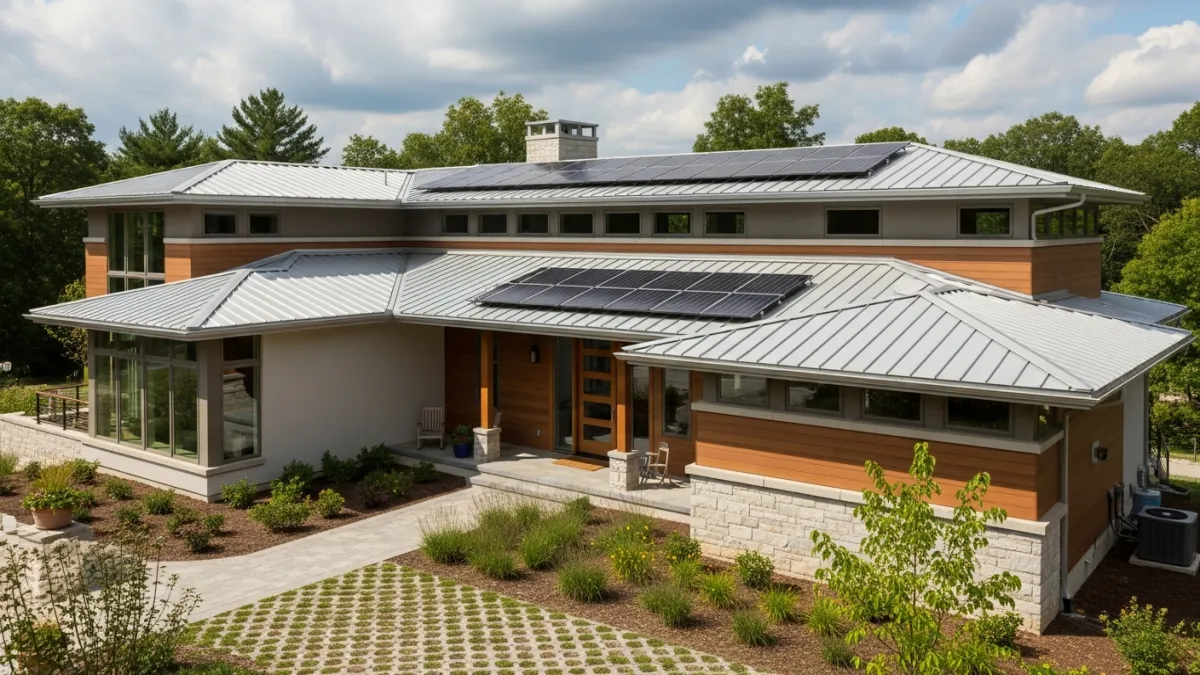
Energy efficient roofing in Northern Virginia is one of the most impactful upgrades you can make to reduce your home's energy consumption and lower your utility bills. Your roof absorbs more solar radiation than any other surface on your home, and in Northern Virginia's climate — where summer temperatures regularly push into the 90s and attic temperatures can exceed 150 degrees — the material on top of your house directly determines how hard your air conditioning system has to work. The right roofing material, combined with proper ventilation and insulation strategies, can cut your cooling costs by 10 to 25 percent and make your home noticeably more comfortable during the hottest months of the year.
Northern Virginia homeowners face a unique climate challenge that makes energy efficient roofing especially valuable. The region experiences both extreme summer heat with high humidity and cold winters with freeze-thaw cycles. This dual-season demand means your roof needs to perform thermally in both directions — keeping heat out during July and August while helping retain warmth during December and January. Standard dark-colored asphalt shingles absorb up to 90 percent of the sun's energy and radiate that heat into your attic, forcing your HVAC system to work overtime. Energy efficient alternatives reflect a significant portion of that solar energy before it ever enters your home's thermal envelope.
Whether you're planning a full roof replacement or evaluating options for a new construction project, understanding the energy efficient roofing products available in the Northern Virginia market puts you in a position to make a decision that pays dividends for the next 25 to 50 years. This guide covers every major option — from cool-roof shingles and reflective metal roofing to attic ventilation improvements and radiant barriers — with realistic cost data, expected energy savings, and recommendations specific to our regional climate.
How Your Roof Affects Energy Efficiency
Before evaluating specific products, it helps to understand the physics of how your roof interacts with solar energy. This isn't academic — it's the foundation for every energy efficient roofing decision you'll make.
When sunlight hits your roof, three things happen. Some energy is reflected back into the atmosphere. Some is absorbed by the roofing material and converted to heat. And some of that absorbed heat is then emitted (radiated) away from the surface. The two measurements that matter most are solar reflectance — the percentage of solar energy the roof reflects — and thermal emittance — how efficiently the roof radiates absorbed heat back out rather than conducting it into your attic.
A standard dark asphalt shingle roof has a solar reflectance of roughly 5 to 15 percent, meaning it absorbs 85 to 95 percent of the solar energy hitting it. On a 95-degree day in Woodbridge or Fairfax, that translates to roof surface temperatures of 150 to 170 degrees. The heat conducts through the roof deck into your attic, where temperatures can reach 140 to 160 degrees. That superheated attic radiates heat downward through your ceiling insulation and into your living space, and your air conditioning system runs continuously trying to compensate.
Energy efficient roofing materials change this equation dramatically. A cool-roof product with a solar reflectance of 25 to 65 percent keeps significantly less heat from entering the system in the first place. The difference between a 150-degree attic and a 110-degree attic is measurable on your utility bill — and you feel it in the comfort of your second-floor rooms, which are always the first to overheat in a poorly performing roof system.
Cool Roofing: What It Means and Why It Matters in Northern Virginia
Cool roofing is an umbrella term for any roofing material specifically designed to reflect more solar energy and emit more absorbed heat than a conventional roof. The concept originated in commercial roofing — white TPO and PVC membranes have been standard on flat commercial buildings for decades — but the technology has expanded significantly into residential products over the past ten to fifteen years.
For Northern Virginia homeowners, cool roofing is relevant because our cooling season is both long and expensive. From May through September, air conditioning accounts for a significant portion of your electric bill. Homes in Woodbridge, Sterling, Reston, and Fairfax commonly see summer electric bills of $200 to $350 per month, with a substantial portion of that cost driven by cooling. A cool roof that reduces attic temperatures by 20 to 40 degrees directly reduces the thermal load your HVAC system must overcome.
The Cool Roof Rating Council (CRRC) maintains a directory of tested and rated roofing products with verified solar reflectance and thermal emittance values. When comparing roofing materials, checking CRRC ratings gives you objective performance data rather than relying solely on manufacturer marketing claims. Products rated by the CRRC have been tested under standardized conditions, and their performance is verified through ongoing monitoring.
Cool Roof Performance in Virginia's Four-Season Climate
One question Northern Virginia homeowners commonly ask is whether a cool roof that reflects heat in summer will also reflect beneficial solar warmth in winter, creating a net-zero benefit. Research from the Department of Energy and Oak Ridge National Laboratory shows that in climate zone 4A — which includes all of Northern Virginia from Arlington to Woodbridge to Manassas — the summer cooling savings from a cool roof significantly outweigh any minor increase in winter heating costs. The reason is straightforward: heating systems run on natural gas or heat pumps at a much lower cost per BTU than air conditioning, and the sun angle in winter is so low that roof solar gain is minimal regardless of reflectance.
In practical terms, a Northern Virginia homeowner who installs a cool roof can expect net annual energy savings even when accounting for the marginal winter heating penalty. The Department of Energy estimates that cool roofs in climate zone 4 produce net savings of $0.10 to $0.30 per square foot of roof area per year. On a 2,000 square foot home with approximately 2,200 to 2,500 square feet of roof surface, that works out to $220 to $750 in net annual savings.
Reflective Shingles: Energy Efficiency Without Changing the Look
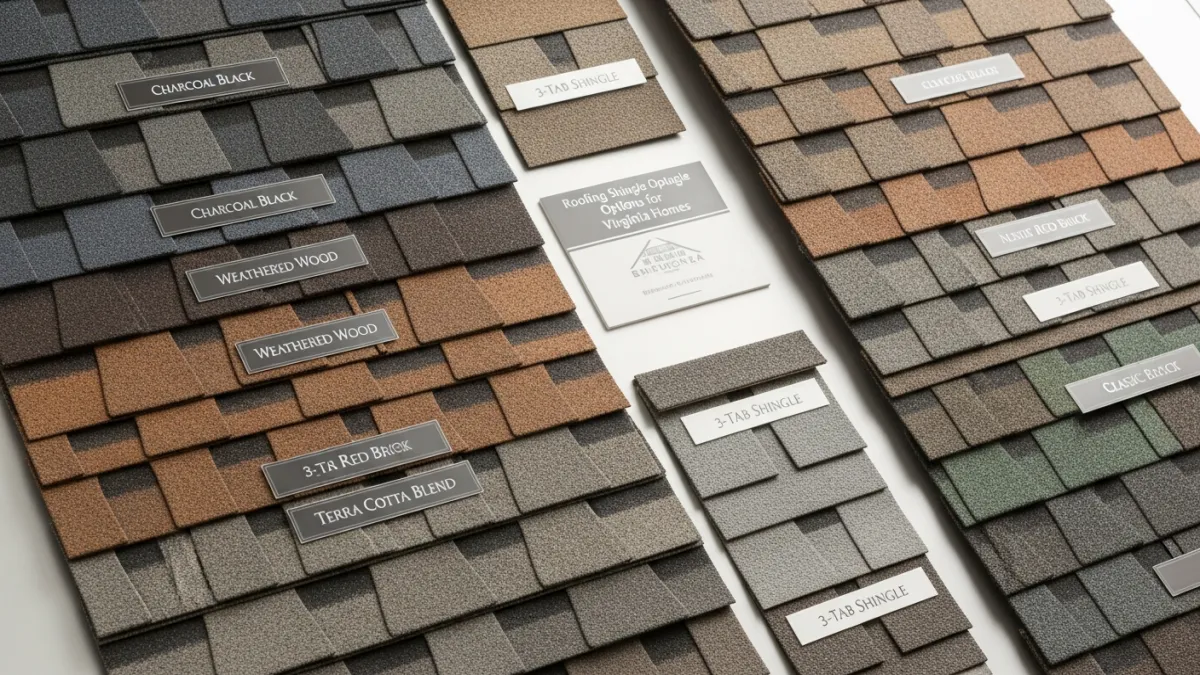
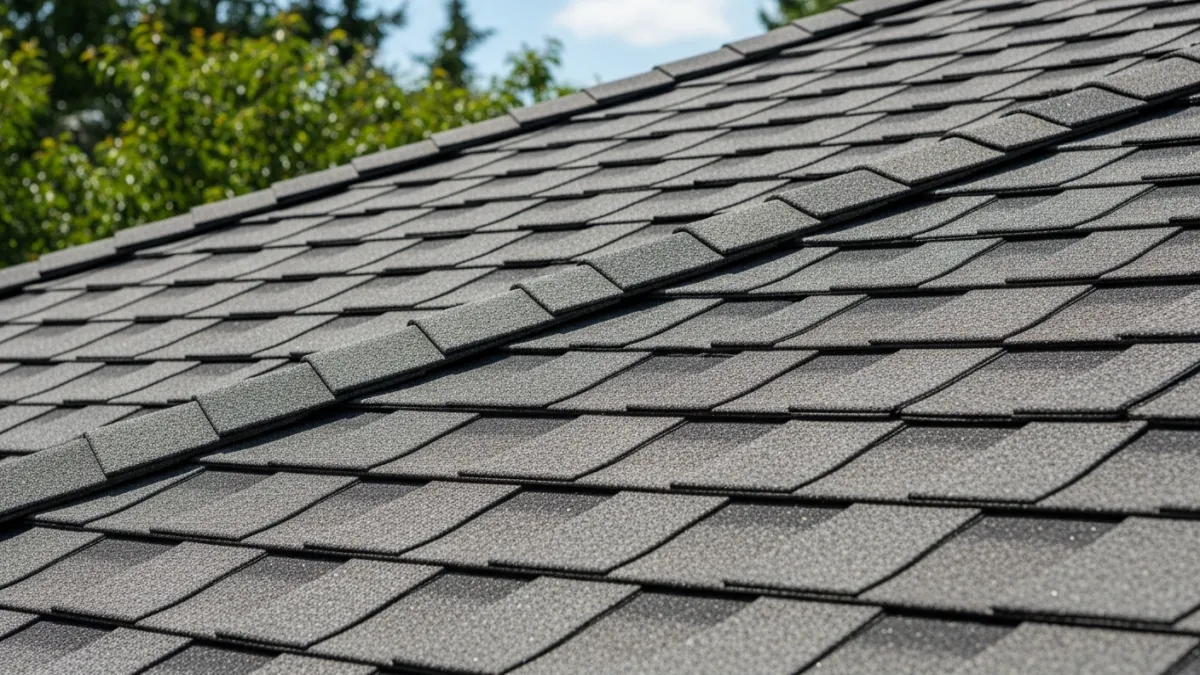
If you want the traditional appearance of asphalt shingles with improved energy performance, reflective shingles — also called cool-color shingles — are the most practical option. These products use specially engineered granules that reflect a higher percentage of solar infrared radiation than standard granules while maintaining the same colors and textures homeowners expect.
The engineering behind reflective shingles focuses on the near-infrared spectrum, which carries roughly half of the sun's energy but isn't visible to the human eye. By reflecting more infrared energy while absorbing visible light normally, manufacturers produce shingles that look identical to conventional colors — browns, grays, blacks, and blends — but perform significantly better thermally. A dark brown reflective shingle might achieve a solar reflectance of 25 to 40 percent compared to 5 to 15 percent for a standard dark brown shingle.
Major Reflective Shingle Product Lines
The three largest shingle manufacturers — GAF, CertainTeed, and Owens Corning — all produce Energy Star qualified reflective shingle lines that are widely available to Northern Virginia contractors:
- GAF Timberline Cool Series: Uses highly reflective granules across a range of colors. Meets Energy Star requirements and carries the same lifetime limited warranty as the standard Timberline HDZ line. Available in colors specifically formulated for cool-roof performance
- CertainTeed Landmark Solaris: Features solar reflective granules that reduce roof surface temperatures. Carries a solar reflectance index (SRI) that meets or exceeds Energy Star steep-slope requirements. Available in multiple color options
- Owens Corning Duration Premium Cool: Engineered with SureNail technology and cool-roof granules. Meets Energy Star requirements and maintains the same structural performance as the standard Duration line
The cost premium for reflective shingles over standard architectural shingles is typically $500 to $1,500 for a full roof installation on a 2,000 square foot Northern Virginia home. Given annual energy savings of $150 to $400 from the shingles alone, the payback period is usually two to five years — making reflective shingles one of the most cost-effective energy upgrades available during a roof replacement.
Metal Roofing Energy Savings in Northern Virginia
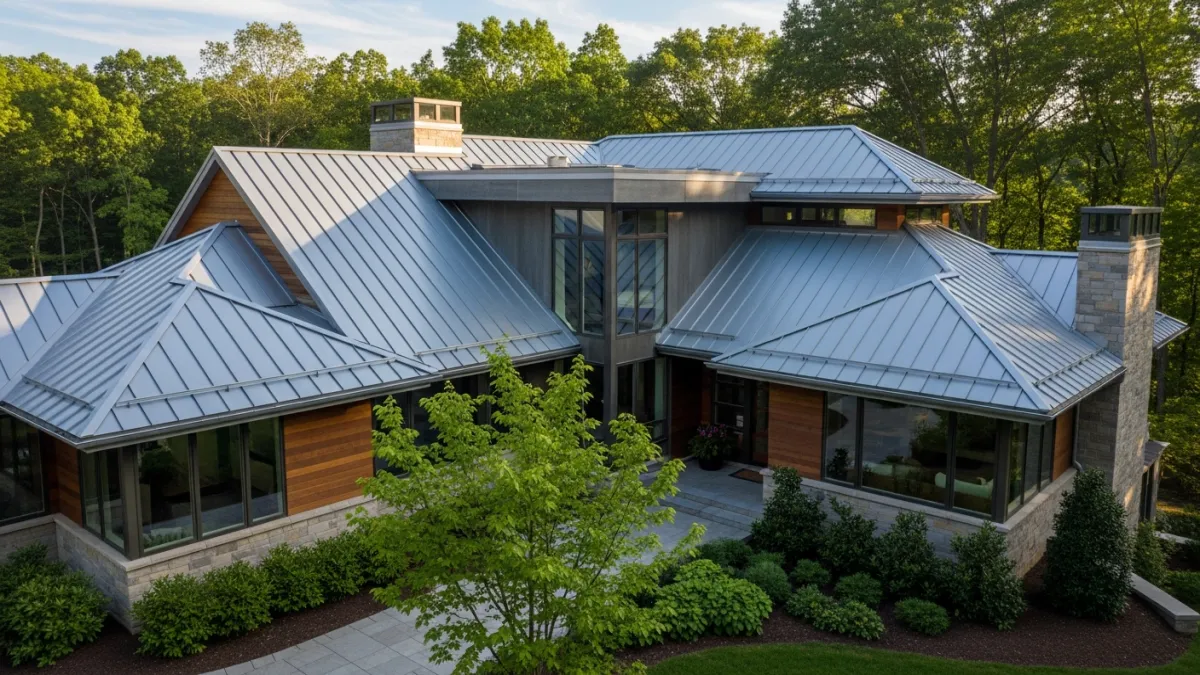
Metal roofing is the highest-performing energy efficient roofing option available for residential homes in Northern Virginia. A properly installed metal roof combines high solar reflectance, excellent thermal emittance, and a lifespan of 40 to 60 years, making it a long-term investment that pays for itself through reduced energy costs and eliminated re-roofing expenses.
How Metal Roofing Reduces Energy Costs
Metal roofing reduces energy costs through three mechanisms that work together. First, factory-applied reflective coatings on metal panels achieve solar reflectance values of 50 to 70 percent — far higher than any asphalt product. A light-colored standing seam metal roof on a Woodbridge home might reflect 65 percent of solar energy compared to 10 percent for a standard dark shingle, keeping the roof surface 50 to 60 degrees cooler on a summer afternoon.
Second, metal has excellent thermal emittance — it releases absorbed heat rapidly rather than storing and conducting it into your attic. A metal roof that does absorb heat dissipates it quickly once the sun angle changes or cloud cover moves in, while an asphalt roof continues radiating stored heat into the evening hours.
Third, metal roofing can be installed over a ventilated air gap using battens or purlins, creating an additional thermal break between the metal surface and the roof deck. This air gap allows convective cooling beneath the panels and further reduces heat transfer into the attic. Not all installations include this detail, but when used in Northern Virginia's climate, it provides a measurable additional reduction in attic temperatures.
Metal Roofing Energy Savings by the Numbers
The Metal Roofing Alliance and the Department of Energy cite energy savings of 20 to 25 percent on cooling costs for metal roofing compared to standard asphalt shingles. On a Northern Virginia home with summer cooling costs of $200 to $350 per month (June through September), that translates to $40 to $88 per month in savings during the peak cooling season. Over a full year, total energy savings from metal roofing typically range from $300 to $600 annually for a standard Northern Virginia home.
Over a 40-year metal roof lifespan, those savings compound to $12,000 to $24,000 — which offsets a significant portion of the higher initial cost compared to asphalt. When you add the fact that you'll avoid at least one complete re-roofing during that same period (a cost of $9,000 to $16,000), the total cost of ownership for metal roofing is often lower than asphalt despite the higher upfront investment.
Metal Roof Colors and Energy Performance
Color matters significantly for metal roof energy performance. Light colors — white, light gray, light tan, and light blue — achieve the highest solar reflectance and deliver the greatest cooling savings. However, many Northern Virginia homeowners prefer darker colors that complement their home's siding and trim. Modern cool-pigment technology allows darker metal roof colors to achieve higher reflectance than their appearance would suggest, similar to the infrared-reflective granule technology used in cool shingles. A charcoal metal panel with cool pigments might reflect 30 to 40 percent of solar energy compared to 5 to 10 percent for a standard charcoal paint, delivering meaningful savings even in a darker color.
Attic Ventilation: The Foundation of Roof Energy Efficiency
No roofing material — no matter how reflective — performs optimally without proper attic ventilation. Ventilation is the system that moves hot air out of your attic and draws cooler air in, preventing the heat that does get past your roofing material from building up and overwhelming your insulation and HVAC system.
Many older Northern Virginia homes — particularly those built in the 1970s through 1990s in communities across Woodbridge, Burke, Springfield, and Fairfax — have inadequate attic ventilation. The original builders often installed fewer soffit vents than current standards require, or subsequent homeowners inadvertently blocked soffit vents when adding insulation. The result is an attic that traps heat in summer and moisture in winter, accelerating shingle deterioration from the underside and increasing energy costs year-round.
How Attic Ventilation Works
A properly ventilated attic uses a balanced system of intake vents (typically at the soffits along the eaves) and exhaust vents (typically a continuous ridge vent along the roof peak). Cool air enters through the soffit vents, flows upward along the underside of the roof deck, absorbs heat, and exits through the ridge vent. This continuous convective loop keeps attic temperatures significantly closer to outdoor ambient temperatures rather than allowing heat to build up unchecked.
The standard ventilation formula requires one square foot of net free ventilation area for every 150 square feet of attic floor space, split evenly between intake and exhaust. For a 2,000 square foot home with a full attic footprint, that means approximately 13.3 square feet of total ventilation area — roughly 6.7 square feet of soffit intake and 6.7 square feet of ridge exhaust. Many homes fall significantly short of this standard, and the imbalance between intake and exhaust is often the bigger problem. A ridge vent with insufficient soffit intake creates negative pressure that can pull conditioned air from your living space through ceiling penetrations, actually increasing energy costs.
Ventilation Improvements During Roof Replacement
A roof replacement is the ideal time to upgrade your attic ventilation because the roof deck is fully exposed and accessible. Common ventilation improvements include:
- Installing continuous ridge vent to replace outdated box vents or turbine vents, providing uniform exhaust along the entire ridge line
- Adding soffit vents or replacing solid soffits with vented panels to increase intake airflow
- Installing proper baffles at each rafter bay to prevent insulation from blocking the soffit-to-ridge airflow path
- Sealing attic floor penetrations around electrical wires, plumbing pipes, HVAC ducts, and recessed lights to prevent conditioned air from leaking into the attic
- Removing old turbine vents or powered attic fans that can interfere with the balanced intake-exhaust system created by ridge-and-soffit ventilation
Adding or upgrading ventilation during a roof replacement typically adds $300 to $1,200 to the project cost. The return on this investment is significant — a properly ventilated attic can be 20 to 40 degrees cooler than an unventilated one during summer, which directly translates to lower cooling costs and longer shingle life. Your roofing contractor should evaluate your ventilation as part of every roof replacement scope.
Radiant Barriers: Blocking Heat Before It Reaches Your Insulation
A radiant barrier is a reflective material — typically aluminum foil laminated to kraft paper, oriented strand board, or a plastic film — installed in the attic to reflect radiant heat from the underside of the roof deck before it reaches your attic insulation and living space. While not a roofing material itself, a radiant barrier works in direct partnership with your roof to dramatically reduce heat transfer into your home.
How Radiant Barriers Work
Heat travels through your roof system in three ways: conduction (through solid materials), convection (through air movement), and radiation (through electromagnetic waves). Insulation handles conduction and convection, but it does little to stop radiant heat transfer. On a hot Northern Virginia afternoon, the sun heats your roof surface to 150+ degrees. That heat conducts through the roof deck and then radiates downward from the hot deck surface into the attic space. A radiant barrier installed on the underside of the roof rafters or across the attic floor reflects up to 97 percent of that radiant heat, preventing it from reaching your insulation layer.
The result is measurable. Oak Ridge National Laboratory testing shows that radiant barriers can reduce attic temperatures by 20 to 30 degrees in hot climates. In Northern Virginia's climate zone 4A, the Department of Energy estimates that radiant barriers reduce cooling costs by 5 to 15 percent. On a home spending $200 to $350 per month on summer electricity, that's $10 to $53 per month in savings during the cooling season.
Radiant Barrier Installation Options
There are two primary ways to install a radiant barrier in a Northern Virginia attic:
- Stapled to the underside of the roof rafters: This is the most effective placement because it reflects heat before it enters the attic air space. The foil faces downward into the attic, and a small air gap between the foil and the roof deck allows the barrier to function properly. This method is easiest to install during a roof replacement when the deck is accessible, but can also be done from inside the attic on existing roofs
- Laid across the top of attic insulation: This method is simpler but slightly less effective because it reflects heat that has already entered the attic air space. It works best in attics with adequate ventilation where the radiant barrier supplements rather than replaces proper airflow. The foil must face upward and must not be covered with insulation or debris to maintain its reflective performance
Installation costs for radiant barriers in Northern Virginia typically range from $700 to $1,800 for a standard home, depending on attic size, accessibility, and installation method. The barrier itself costs $0.15 to $0.50 per square foot, with labor accounting for the majority of the total cost. Many homeowners combine a radiant barrier installation with a roof replacement or attic insulation upgrade to minimize access costs and disruption.
Energy Star Rated Roofing Products
The Energy Star program, administered by the U.S. Environmental Protection Agency, certifies roofing products that meet specific solar reflectance and thermal emittance thresholds. For homeowners comparing roofing shingles and other materials, the Energy Star label provides a reliable, third-party verified benchmark for energy performance.
Energy Star Requirements for Roofing
Energy Star sets different standards for steep-slope roofing (the type used on most residential homes) and low-slope roofing (used on flat or nearly flat sections). For steep-slope products like shingles, tiles, and metal panels, the requirements are:
- Initial solar reflectance: 0.25 or greater (reflects at least 25 percent of solar energy)
- Three-year aged solar reflectance: 0.15 or greater (maintains at least 15 percent reflectance after three years of weathering)
For low-slope products (less than 2:12 pitch), the requirements are higher:
- Initial solar reflectance: 0.65 or greater
- Three-year aged solar reflectance: 0.50 or greater
The aged reflectance requirement is important because all roofing surfaces lose some reflectance over time due to dirt accumulation, biological growth, and weathering. Northern Virginia's humidity and tree cover can accelerate this aging on roofs that aren't regularly cleaned. Products that maintain strong reflectance after three years of real-world exposure deliver sustained energy savings, not just first-year performance.
Tax Credits and Incentives for Energy Star Roofing
Energy Star certified roofing products may qualify for federal tax credits under the Inflation Reduction Act. As of 2025, the Energy Efficient Home Improvement Credit (Section 25C) allows homeowners to claim up to 30 percent of the cost of qualifying energy efficient improvements, including Energy Star roofing, up to a maximum of $1,200 per year for combined qualifying improvements. The specific roofing component is capped, so consult with your tax advisor for current limits applicable to your situation. This credit can significantly reduce the net cost of upgrading to energy efficient roofing materials.
Some Virginia utility companies and local jurisdictions also offer rebates or incentive programs for energy efficient home improvements, though availability varies by provider and year. Check with your electric utility and the Virginia Department of Energy for current programs. Your roofing contractor should be able to help you identify which products qualify for available incentives and provide the documentation you'll need for tax credit claims.
Calculating Your Energy Savings: A Northern Virginia Example
Understanding the potential energy savings from an efficient roof requires working through the numbers with realistic local data. Here's how the calculation works for a typical Northern Virginia home.
The Baseline
Consider a 2,200 square foot colonial-style home in Woodbridge with a standard dark-colored architectural asphalt shingle roof, moderate attic insulation (R-30), and original soffit-and-ridge ventilation. The homeowner's annual electricity cost is approximately $3,200, with roughly 40 percent — $1,280 — attributable to cooling (May through September). This is consistent with Dominion Energy data for Northern Virginia residential customers.
Scenario 1: Reflective Asphalt Shingles Only
Upgrading from standard shingles to Energy Star rated reflective shingles during a roof replacement adds approximately $800 to the project cost. Expected cooling reduction: 10 to 15 percent. Annual cooling savings: $128 to $192. Payback period: approximately four to six years. Over a 25-year shingle lifespan, total savings: $3,200 to $4,800.
Scenario 2: Reflective Shingles + Ventilation Upgrade + Radiant Barrier
Combining reflective shingles ($800 premium), ventilation improvements ($600), and a radiant barrier ($1,200) creates a total energy investment of approximately $2,600 above the cost of a standard roof replacement. Expected combined cooling reduction: 20 to 25 percent. Annual cooling savings: $256 to $320. Payback period: approximately eight to ten years. Over a 25-year lifespan, total savings: $6,400 to $8,000.
Scenario 3: Standing Seam Metal Roofing + Ventilation Upgrade
Installing a standing seam metal roof with reflective coating and upgrading ventilation represents a higher initial investment — approximately $8,000 to $10,000 more than a standard asphalt roof replacement. Expected cooling reduction: 20 to 25 percent. Annual cooling savings: $256 to $320. However, the metal roof also eliminates the cost of one complete re-roofing cycle during its lifespan (saving $9,000 to $16,000), lasts 40 to 60 years, and requires virtually no maintenance. Total 40-year savings including avoided re-roofing: $19,000 to $29,000.
Cost of Energy Efficient Roofing in Northern Virginia
Understanding energy efficient roofing costs in Northern Virginia starts with recognizing that the premium for energy efficient materials over standard products is often smaller than homeowners expect. The largest cost component of any roof replacement — labor, tear-off, disposal, and accessories — remains the same regardless of whether you choose standard or energy efficient shingles.
| Material / Upgrade | Low End | High End | Notes |
|---|---|---|---|
| Energy Star reflective shingles (2,000 sq ft) | $9,000 | $16,000 | $500-$1,500 premium over standard |
| Standing seam metal with reflective coating (2,000 sq ft) | $17,000 | $24,000 | 40-60 year lifespan, highest efficiency |
| Cool-color metal shingle panels (2,000 sq ft) | $14,000 | $20,000 | Shingle appearance, metal performance |
| Radiant barrier installation | $700 | $1,800 | Attic size and access dependent |
| Attic ventilation upgrade (ridge + soffit) | $300 | $1,200 | Best done during roof replacement |
| Attic insulation upgrade to R-49 | $1,500 | $3,500 | Complements cool roof for max savings |
| Permit — Prince William County | $75 | $250 | Required for full replacement |
Factors That Affect Your Energy Efficient Roofing Cost
Several variables determine where your project falls within these ranges:
- Roof size and pitch: Steeper roofs require more material and labor time. A 10:12 pitch has significantly more surface area than a 4:12 pitch on the same footprint
- Material choice: The gap between standard and premium energy efficient products varies by manufacturer and product line
- Roof complexity: Dormers, valleys, chimneys, skylights, and multiple roof planes increase labor costs regardless of material
- Existing ventilation condition: A home that already has adequate ridge-and-soffit ventilation needs less work than one with outdated box vents or no soffit intake
- Attic accessibility: Radiant barrier and insulation work costs more in attics with low clearance, limited access points, or HVAC equipment that restricts movement
- Number of tear-off layers: Removing two layers of old shingles adds $500 to $1,500 in tear-off costs
Prices shown are typical ranges for Northern Virginia as of 2025 and vary based on home size, material grade, site access, and current material costs. Contact us for a free on-site estimate.
The best way to get accurate pricing for your specific home is to schedule an on-site inspection. We provide free, itemized estimates that break out material options, energy efficiency upgrades, and projected savings. Financing options are available to spread the cost of energy efficient upgrades over time.
Choosing the Right Energy Efficient Roofing for Your Home
The best energy efficient roofing choice for your Northern Virginia home depends on several factors that are specific to your situation. Here's a framework for making the decision:
How Long You Plan to Stay
If you're planning to stay in your home for 20 or more years, the higher upfront cost of metal roofing delivers the greatest long-term return. The energy savings compound over decades, and you avoid the cost and disruption of a second roof replacement. If you're planning to move within five to ten years, reflective shingles provide immediate energy savings at a minimal premium and also serve as a selling point — Energy Star rated roofing is increasingly attractive to buyers.
Your Budget
If your budget is focused on the roof replacement itself, upgrading from standard to reflective shingles is the most cost-effective energy improvement — $500 to $1,500 delivers measurable savings for 25 years. If your budget allows additional investment, adding a radiant barrier and ventilation upgrades maximizes the return from whatever roofing material you choose. Metal roofing requires the highest initial investment but delivers the greatest total return over its lifespan.
Your Home's Current Condition
A home with poor attic insulation and inadequate ventilation will benefit more from a comprehensive approach — roofing material upgrade plus insulation plus ventilation — than from a premium roofing material installed over a dysfunctional attic system. Conversely, a home with recent insulation upgrades and proper ventilation can achieve excellent results from a roofing material upgrade alone.
HOA and Aesthetic Considerations
Some Northern Virginia HOAs restrict roofing material types or colors. Communities in Woodbridge, Lake Ridge, Dale City, and Montclair each have their own architectural guidelines. Metal roofing may not be permitted in some neighborhoods, making reflective shingles your best energy efficient option. Check your HOA's architectural guidelines before committing to a material, and work with a contractor who has experience navigating HOA approvals in your specific community.
| Energy Upgrade | Cooling Savings | Cost Premium | Payback Period |
|---|---|---|---|
| Reflective shingles only | 10-15% | $500-$1,500 | 2-5 years |
| Reflective shingles + ventilation | 15-20% | $1,100-$2,700 | 4-7 years |
| Reflective shingles + ventilation + radiant barrier | 20-25% | $1,800-$4,500 | 6-10 years |
| Metal roofing with reflective coating | 20-25% | $8,000-$10,000 | 12-18 years (energy only) |
| Metal roofing + ventilation + radiant barrier | 25%+ | $9,000-$13,000 | 10-15 years (energy only) |
Common Mistakes to Avoid with Energy Efficient Roofing
Energy efficient roofing delivers real savings, but only when the entire system is designed and installed correctly. Here are the most common mistakes Northern Virginia homeowners make:
- Installing a cool roof over a poorly insulated attic. A reflective roof reduces heat gain from the roof surface, but if your attic insulation is thin or has gaps, heat still transfers into your living space through the ceiling. The roof and the insulation must work together — upgrading one without addressing the other leaves performance on the table
- Blocking soffit vents with insulation. When attic insulation is added or upgraded, batt or blown-in material can drift over the soffit vents and block airflow into the attic. Proper ventilation baffles at each rafter bay prevent this and should be installed as part of any insulation or roofing project
- Mixing exhaust vent types. A ridge vent and box vents on the same roof can create competing airflow patterns that actually reduce ventilation efficiency. Choose one exhaust system — continuous ridge vent is almost always the best option for residential roofs — and remove conflicting vent types
- Ignoring the color impact. Choosing the darkest available color in a reflective shingle line still delivers less performance than a medium or light color. If energy efficiency is a priority, choose the lightest color your aesthetic preferences and HOA guidelines allow
- Skipping the radiant barrier because of cost. At $700 to $1,800, a radiant barrier is one of the highest-return energy investments available for a Northern Virginia attic. The payback period is two to four years, and the barrier lasts indefinitely. Skipping it to save upfront cost is often a false economy
Ready to Lower Your Energy Bills with a Better Roof?
Get a free, no-pressure estimate from Woodbridge Roofers. We'll inspect your current roof, evaluate your attic ventilation and insulation, and recommend the energy efficient options that make sense for your home and budget. Call us at (571) 570-7930 or schedule online.
Schedule Free ConsultationFrequently Asked Questions
Related Articles
- Metal Roofing in Northern Virginia
- Best Roofing Shingles for Virginia Homes
- The Roof Replacement Process in Woodbridge VA
Conclusion
Energy efficient roofing in Northern Virginia is not a niche upgrade — it's a practical investment that reduces your monthly energy costs, improves your home's comfort, and extends the life of your HVAC system. Whether you choose Energy Star rated reflective shingles for a modest premium over standard products, invest in standing seam metal roofing for maximum long-term performance, or complement either option with attic ventilation improvements and a radiant barrier, the energy savings of 10 to 25 percent on cooling costs are real and measurable on your utility bill.
Northern Virginia's climate — with its hot, humid summers pushing attic temperatures past 140 degrees and its cold winters demanding efficient heating — makes the roof one of the most important components in your home's energy performance. Every roof replacement is an opportunity to upgrade that performance without adding significant cost to the project. A $500 to $1,500 premium for reflective shingles pays for itself within two to five years. A radiant barrier at $700 to $1,800 pays for itself even faster. And metal roofing, while a larger upfront investment, delivers the highest total return over its 40 to 60 year lifespan.
If your roof is approaching the end of its life or you're already planning a replacement, don't settle for standard materials when energy efficient options are available at a modest premium. Call Woodbridge Roofers at (571) 570-7930 or book a free phone consultation. We'll evaluate your current roof, assess your attic conditions, and recommend the energy efficient roofing solution that delivers the best return for your home and budget.