Does Homeowners Insurance Cover a Roof Replacement in VA?
Does Homeowners Insurance Cover a Roof Replacement in VA?
Key Takeaways
- Does homeowners insurance cover roof replacement in VA? Yes — but only when the damage is caused by a sudden, covered peril like wind, hail, or a fallen tree, not by aging or deferred maintenance
- Virginia policies use either ACV (actual cash value) or RCV (replacement cost value) coverage — the difference can mean $5,000 to $10,000+ in out-of-pocket costs on a 15-year-old roof
- Standard deductibles on Virginia homeowner policies range from $1,000 to $2,500, though some policies carry separate wind/hail deductibles calculated as a percentage of dwelling coverage
- Having your roofing contractor present during the adjuster inspection ensures all damage is documented, including less obvious issues like bruised shingles and compromised flashing
- Thorough documentation — photos, videos, contractor scope, and a timeline of events — is the single most important factor in getting your claim approved for the full scope of work
If you're a Virginia homeowner staring at a damaged roof after a storm, the first question that comes to mind is almost always the same: does homeowners insurance cover roof replacement in VA? The short answer is yes — when the damage results from a sudden, covered event like wind, hail, or a fallen tree. Insurance does not cover roof replacement caused by normal aging, wear and tear, or neglected maintenance. The distinction between covered storm damage and excluded deterioration is the single most important factor in whether your claim gets approved or denied, and understanding that line before you file saves time, money, and frustration.
Northern Virginia homeowners deal with a specific mix of weather that puts roofs at risk year-round. Summer thunderstorms along the Potomac corridor bring damaging wind gusts that rip shingles loose and drive rain into exposed underlayment. Hailstorms — while less frequent than in the Midwest — strike the Woodbridge, Dale City, and Lake Ridge areas with enough force to bruise shingle surfaces and crack pipe boots. Winter ice storms coat roofs with weight that stresses flashing joints and ridge caps. And the remnants of tropical systems occasionally track up I-95 and deliver sustained wind and rain that overwhelm aging roofing systems in a matter of hours. Each of these scenarios creates potential insurance claims, but the process of filing, documenting, and negotiating those claims is where most homeowners feel lost.
This guide breaks down everything Virginia homeowners need to know about roof replacement insurance coverage — what's covered and what isn't, how ACV and RCV policies work, what your deductible actually means, how to file a claim effectively, how to work with adjusters, and how to document damage so your claim reflects the full scope of necessary work. Whether you're dealing with fresh storm damage in Woodbridge or trying to understand your coverage before the next storm hits, this article gives you the information you need to navigate the process with confidence.
What Homeowners Insurance Covers on Your Roof
Virginia homeowners insurance policies — whether issued by State Farm, USAA, Allstate, Erie, or any other carrier — follow the same general framework for roof coverage. Your policy covers damage caused by named perils, which are specific events listed in your policy documents. The most common covered perils that lead to roof replacement claims in Northern Virginia include:
- Wind damage: Shingles torn off, ridge caps lifted, flashing displaced, or underlayment exposed by high winds during thunderstorms, nor'easters, or tropical storm remnants
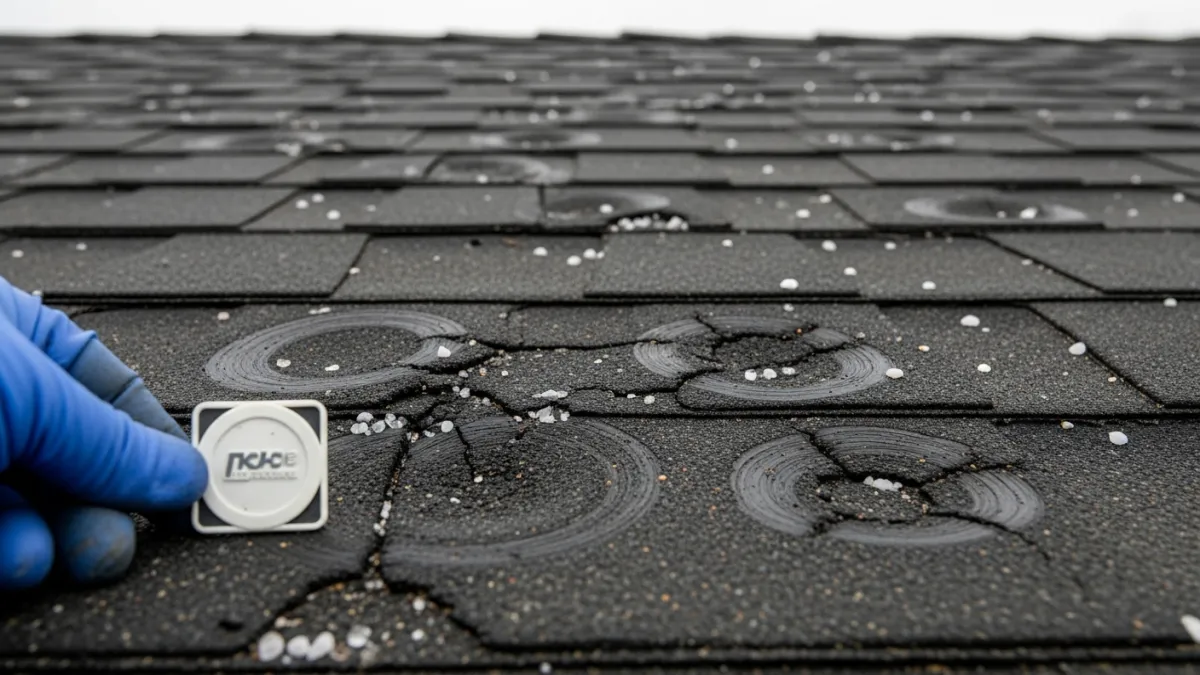
- Hail damage: Bruised or cracked shingles, fractured pipe boots, dented metal flashing, and granule loss caused by hailstone impact
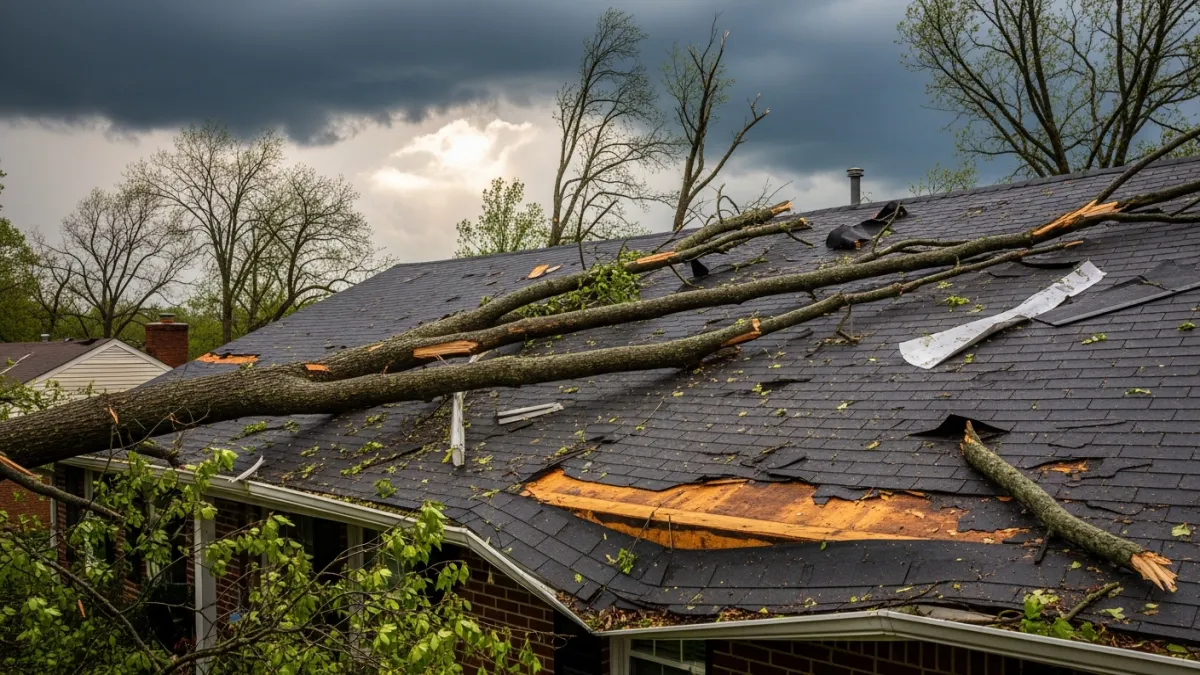
- Fallen trees and limbs: Impact damage from trees or large branches that strike the roof during storms, including structural damage to the deck and framing
- Fire and lightning: Damage from fire or a direct lightning strike, including charring, structural compromise, and related water damage from firefighting efforts
- Weight of ice and snow: Structural damage caused by excessive ice or snow load, including collapsed sections and ice dam-related water intrusion in some policies
The key principle is that the damage must result from a sudden, accidental event — not from gradual deterioration. A tree crashing through your roof during a storm is a covered event. Shingles curling and cracking over 20 years of sun exposure is not. Your insurance company will investigate the cause of damage, and the adjuster's determination of causation drives the entire claim outcome.
What Homeowners Insurance Does NOT Cover
Understanding the exclusions is just as important as knowing what's covered. Virginia homeowners insurance policies consistently exclude the following causes of roof damage:
- Normal wear and tear: Shingles reaching the end of their expected lifespan, gradual granule loss from UV exposure, and age-related cracking or curling are maintenance issues, not insurable events
- Deferred maintenance: If you've neglected obvious repairs — a leaking pipe boot you've known about for two years, clogged gutters that have caused fascia rot, or moss growth you've never addressed — the resulting damage is considered preventable and falls outside coverage
- Improper installation: If your roof was installed incorrectly and fails as a result, your insurance company will deny the claim and direct you to pursue the installing contractor's workmanship warranty instead
- Cosmetic damage only: Some Virginia policies — particularly those issued or renewed after 2015 — include cosmetic damage exclusions for metal roofs or impact-resistant shingles. These exclusions mean that hail dents on metal roofing or minor bruising that doesn't affect the roof's functional performance may not be covered
- Flood damage: Standard homeowners policies exclude flood damage entirely. If rising water damages your roof structure from below — an unlikely but not impossible scenario in flood-prone areas near the Occoquan River or Neabsco Creek — you would need a separate flood insurance policy through NFIP or a private carrier
- Pest and animal damage: Damage caused by raccoons, squirrels, woodpeckers, or insects chewing through roofing materials or soffit vents is excluded from standard policies
The gray area that creates the most disputes is when storm damage occurs on an older roof. Your insurance company may argue that the damage was pre-existing or that the roof's age contributed to the failure. This is where having an experienced roofing insurance claims contractor on your side becomes critical — they can distinguish between storm damage and pre-existing wear and document the difference with evidence the adjuster and insurance company will accept.
ACV vs. RCV: How Your Policy Type Affects Your Payout
One of the most consequential details in your homeowners insurance policy — and one most Virginia homeowners don't fully understand until they file a claim — is whether your roof is covered under actual cash value (ACV) or replacement cost value (RCV). This single distinction can mean thousands of dollars of difference in what you receive from your insurance company.
Replacement Cost Value (RCV) Policies
An RCV policy pays to replace your damaged roof with materials of similar kind and quality at today's prices, without deducting for depreciation. If your 15-year-old architectural shingle roof is destroyed by a hailstorm and the cost to install a comparable new roof is $14,000, an RCV policy covers that full amount minus your deductible.
However, RCV policies typically work in two payments. The first payment — called the actual cash value payment — is issued after the claim is approved and equals the replacement cost minus depreciation minus your deductible. The second payment — called the recoverable depreciation or holdback — is released after you complete the replacement and submit documentation (final invoice, photos of completed work) proving the work was done. This two-step process means you need to have the project completed before you receive the full payout.
For a $14,000 replacement with $4,500 in depreciation and a $1,500 deductible, the math looks like this:
- First payment (ACV): $14,000 - $4,500 depreciation - $1,500 deductible = $8,000
- Second payment (recoverable depreciation): $4,500
- Your out-of-pocket: $1,500 (deductible only)
Actual Cash Value (ACV) Policies
An ACV policy pays the replacement cost minus depreciation — and the depreciation is not recoverable. Using the same example above, your total payout on an ACV policy would be $8,000, and the $4,500 in depreciation would be your responsibility to cover out of pocket in addition to your $1,500 deductible. That means your total out-of-pocket cost would be $6,000 instead of $1,500.
ACV policies have become increasingly common in Virginia over the past decade, particularly for roofs over 10 to 15 years old. Some carriers automatically convert RCV coverage to ACV when your roof reaches a certain age — often 15 or 20 years. Others issue ACV-only policies from the start on homes with older roofs. This conversion often happens at renewal without a prominent notification, which is why many homeowners don't realize they have ACV coverage until they file a claim.
If you're unsure which type of coverage you carry, check your declarations page — the summary document you receive at each policy renewal. Look for the dwelling coverage section and note whether it specifies "replacement cost" or "actual cash value" for the roof. If the language is unclear, call your agent and ask directly.
How Depreciation Is Calculated on Virginia Roofs
Insurance companies calculate depreciation based on your roof's age, expected lifespan, material type, and condition. The formula varies by carrier, but a common approach uses straight-line depreciation over the expected lifespan of the material.
For a standard architectural asphalt shingle roof with a 25-year expected lifespan, the annual depreciation rate is approximately 4 percent per year. A 10-year-old roof would be depreciated by roughly 40 percent. A 15-year-old roof would face approximately 60 percent depreciation. On a $14,000 replacement, 60 percent depreciation reduces the ACV payout to just $5,600 before your deductible is subtracted — leaving you responsible for more than half the total cost.
| Roof Age | Approx. Depreciation | ACV Payout on $14,000 Replacement | Your Out-of-Pocket (with $1,500 deductible) |
|---|---|---|---|
| 5 years | 20% | $11,200 | $4,300 |
| 10 years | 40% | $8,400 | $7,100 |
| 15 years | 60% | $5,600 | $9,900 |
| 20 years | 80% | $2,800 | $12,700 |
This table illustrates why ACV policies become increasingly painful as your roof ages. A homeowner with a 20-year-old roof on an ACV policy is essentially self-insuring for the vast majority of the replacement cost. If you're carrying ACV coverage on an older roof, it's worth having a conversation with your insurance agent about whether upgrading to RCV is available and what the premium difference would be.
Understanding Your Deductible
Your deductible is the amount you pay out of pocket before your insurance coverage kicks in. On most Virginia homeowner policies, the standard deductible for roof damage claims ranges from $1,000 to $2,500. This is the amount you'll owe regardless of how much the insurance company approves for the repair or replacement.
Standard vs. Percentage-Based Deductibles
Some Virginia policies carry a separate wind and hail deductible that's calculated as a percentage of your dwelling coverage rather than a flat dollar amount. This is common on policies issued by carriers that have experienced high storm claim volumes in the mid-Atlantic region. A 1 percent wind/hail deductible on a home insured for $400,000 equals $4,000. A 2 percent deductible on the same home would be $8,000 — which could approach the full cost of the insurance payout on a moderate claim.
Percentage deductibles are less common in Virginia than in Gulf Coast or tornado-prone states, but they're not unusual in Northern Virginia, particularly on newer policies or homes in areas with higher storm frequency. Check your declarations page specifically for any separate wind/hail deductible language. If your policy has a percentage-based deductible, factor that into your planning before a storm hits — knowing in advance prevents an unpleasant surprise during the claims process.
Can Your Contractor Cover Your Deductible?
No — and any contractor who offers to do so is breaking Virginia law. Waiving or absorbing a homeowner's deductible constitutes insurance fraud in the Commonwealth of Virginia. It artificially inflates the claim amount and violates the terms of your policy. A contractor who offers to "take care of" your deductible is either planning to inflate the scope to recover the amount, planning to cut corners on materials or workmanship to offset the cost, or simply willing to commit insurance fraud. None of those scenarios benefit you as the homeowner. If a contractor makes this offer, walk away — it's one of the clearest red flags in the industry.
How to File a Roof Insurance Claim in Virginia
Filing a roof insurance claim involves a specific sequence of steps. Following this process in order protects your rights, preserves evidence, and positions your claim for the best possible outcome.
Step 1: Document the Damage Immediately
As soon as it's safe after the storm, photograph and video everything you can see from the ground. Walk the entire perimeter of your home and capture shingles on the ground, visible damage to the roof surface, damage to gutters and downspouts, fallen tree limbs, and any dents or impacts on siding, fences, or outdoor structures. These ground-level photos establish the scope and timing of the damage. Do not climb onto the roof yourself — it's dangerous, and your contractor will handle the roof-level inspection.
Note the date and time of the storm, the type of severe weather (wind, hail, lightning), and any relevant details like the direction the wind was coming from or the approximate size of hailstones. If your neighbors experienced similar damage, note that as well — widespread storm damage in a neighborhood strengthens the legitimacy of individual claims.
Step 2: Contact Your Insurance Company
File your claim as soon as possible — ideally within 24 to 48 hours of the storm. Virginia does not have a specific statutory deadline for filing homeowner claims, but most policies require "prompt" notification, and delays can give the insurance company grounds to question whether the damage actually resulted from the reported event. When you call, provide the date and type of storm, a general description of the damage, and your policy number. The carrier will assign a claim number and schedule an adjuster inspection.
Step 3: Schedule a Contractor Inspection
Before the adjuster arrives, have an experienced roofing contractor inspect your roof and prepare a detailed scope of work. This gives you an independent professional assessment of the damage before the insurance company makes its determination. Your contractor should document every damaged component — shingles, underlayment, flashing, pipe boots, ridge caps, drip edge, and any decking damage visible from the attic — with photos, measurements, and a written scope that itemizes the necessary repairs or replacement.
Contact a licensed Woodbridge roofing contractor who has specific experience with insurance restoration work. Not every roofer understands the claims process, and having a contractor who speaks the adjuster's language and knows how to present damage documentation professionally makes a measurable difference in claim outcomes.
Step 4: The Adjuster Inspection
The insurance adjuster will visit your property to inspect the roof, assess the damage, and prepare their own scope of work and estimate. This inspection typically takes 30 to 90 minutes depending on the roof's size and the extent of damage. The adjuster works for the insurance company, and their assessment determines the initial claim payout.
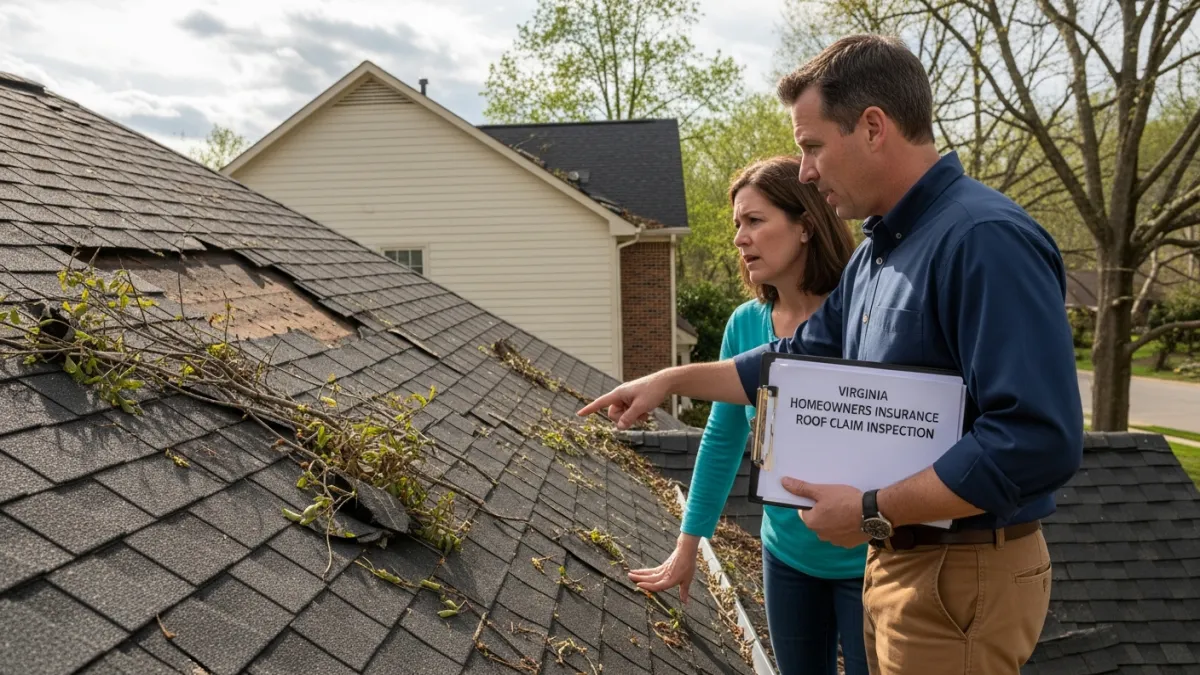
Your roofing contractor should be on site during this inspection. They can walk the roof with the adjuster, point out damage that might be missed during a quick inspection, and ensure the adjuster's scope includes every affected component. Adjusters are generally professional and thorough, but they're also handling high volumes of claims after a storm event, and having a second set of expert eyes on the roof ensures nothing gets overlooked.
Step 5: Review the Adjuster's Report
After the inspection, you'll receive a written summary from the insurance company that includes the adjuster's findings, the approved scope of work, the calculated payout (including any depreciation holdback on RCV policies), and any items that were excluded or denied. Review this document carefully with your contractor. Compare the adjuster's scope line by line against your contractor's independent assessment. Discrepancies are common and are not necessarily adversarial — they're part of the process.
Step 6: File a Supplement If Needed
If the adjuster's scope doesn't cover the full extent of damage, your contractor can file a supplement — an additional submission with supporting documentation for the items that were missed or undervalued. Supplements are a standard part of the insurance claims process and are not confrontational. Common supplement items include decking replacement discovered during tear-off, additional flashing work not visible during the initial inspection, code-required upgrades (ice-and-water shield, drip edge, ventilation improvements), and steep-slope charges that weren't reflected in the original scope.
A well-documented supplement with photos, measurements, and code references has a high approval rate. This is one of the primary advantages of working with a contractor who specializes in insurance restoration work — they know what to include and how to present it.
Working with Insurance Adjusters: What Virginia Homeowners Need to Know
The adjuster assigned to your claim plays a significant role in determining the outcome. Understanding their role, their limitations, and how to work with them productively helps you get a fair result.
Types of Adjusters
There are three types of adjusters you may encounter during the claims process:
- Staff adjusters are employees of your insurance company. They handle claims regularly and follow their company's specific guidelines and software for scoping damage
- Independent adjusters are third-party contractors hired by the insurance company to handle overflow after major storm events. They're licensed and experienced but may not be as familiar with Northern Virginia construction practices and local building codes
- Public adjusters work for you, not the insurance company. You can hire a public adjuster to represent your interests if you feel the claim is being undervalued. Public adjusters typically charge 10 to 15 percent of the claim payout. For complex or high-value claims, this fee can be worth the investment
How to Communicate Effectively with Your Adjuster
Be factual, organized, and professional. Provide your documentation promptly — photos, contractor scope, timeline of events, and any supporting evidence. Don't exaggerate the damage or make claims that aren't supported by evidence. Don't sign anything you don't understand. And don't accept an initial determination as final if it doesn't reflect the actual damage — you have the right to supplement the claim and to request a re-inspection if you disagree with the findings.
If you feel the claim is being handled unfairly, Virginia's State Corporation Commission Bureau of Insurance provides a complaint process for homeowners who believe their insurance company is not acting in good faith. This is a last resort, but knowing it exists gives you leverage in negotiations.
Documentation Tips That Protect Your Claim
The strength of your insurance claim depends entirely on the quality of your documentation. Adjusters make decisions based on evidence, and the homeowner who presents thorough, organized documentation gets a better result than the homeowner who relies on verbal descriptions and memory. Here's what to document and how:
Before the Storm
The best time to start documenting is before damage occurs. Keep these records current and accessible:
- Photos of your roof's current condition from multiple angles — update these annually or after any maintenance work
- Maintenance records showing inspections, repairs, gutter cleaning, and any work performed on the roof
- Your last roof inspection report from a licensed contractor documenting the roof's condition
- Receipts and invoices from previous roofing work, including the original installation if you have it
- Your insurance policy declarations page — know your coverage type (ACV vs. RCV), your deductible, and any exclusions before you need to file
After the Storm
Immediately after a damaging storm, document the following:
- Wide-angle photos of your entire roof from all sides of the property
- Close-up photos of specific damage — displaced shingles, dented flashing, cracked pipe boots, debris on the roof surface
- Ground debris — photograph shingles, granules, or roofing components that have landed in your yard
- Collateral damage — dents on siding, damage to outdoor HVAC units, window damage, and fence or deck damage that corroborates the severity of the storm
- Interior evidence — water stains on ceilings, moisture on attic insulation, and any active leaking
- Date and time stamps — ensure your phone's camera has location and timestamp enabled so every photo carries metadata that proves when and where it was taken
- Weather reports — save screenshots or printouts of National Weather Service alerts, storm warnings, and local weather reports confirming severe weather in your area on the date of the damage
During the Project
If your claim is approved and the replacement proceeds, continue documenting throughout the project. Photos of the tear-off showing the condition of the underlayment and decking support both the original claim and any supplements needed for hidden damage. Photos of the completed installation document that the work was performed and support the release of recoverable depreciation on RCV policies. Keep all contractor invoices, material receipts, and permit documentation organized and accessible.
Cost of Roof Replacement in Northern Virginia: Insurance vs. Out-of-Pocket
Understanding the financial picture — both with and without insurance — helps you make informed decisions about whether to file a claim and what to expect from the payout. Roof replacement costs in Woodbridge and throughout Northern Virginia run 15 to 25 percent above national averages due to higher labor rates, stricter permitting, and the general cost of doing business in the DMV metro area.
| Service / Item | Low End | High End | Notes |
|---|---|---|---|
| Architectural asphalt shingles (2,000 sq ft) | $8,500 | $15,000 | Material + labor, NoVA market |
| Premium designer shingles (2,000 sq ft) | $12,000 | $18,000 | Adds 5-10 years lifespan |
| Standing seam metal roof (2,000 sq ft) | $16,000 | $22,000 | 40-60 year lifespan |
| Deductible (standard Virginia policy) | $1,000 | $2,500 | Your out-of-pocket with RCV policy |
| Wind/hail percentage deductible (1-2%) | $3,000 | $8,000 | Based on $300K-$400K dwelling coverage |
| ACV depreciation gap (15-year-old roof) | $5,000 | $10,000 | Additional out-of-pocket on ACV policies |
| Permit — Prince William County | $75 | $250 | Required for full replacement |
| Emergency tarping (active leak) | $300 | $800 | Usually covered under claim |
Prices shown are typical ranges for Northern Virginia as of 2025 and vary based on home size, material grade, site access, and current material costs. Contact us for a free on-site estimate.
The most reliable way to understand your specific financial exposure is to know your policy type (ACV vs. RCV), your deductible, and the approximate cost of your replacement before a storm hits. We provide free inspections and estimates that give you a clear picture of where you stand. Schedule a free consultation and we'll walk through the numbers with you.
Common Mistakes Virginia Homeowners Make with Roof Claims
Avoiding these mistakes gives your claim the best chance of being approved for the full scope of necessary work:
- Waiting too long to file. Delays between the storm event and your claim filing give the insurance company room to question causation. File within 24 to 48 hours whenever possible
- Not documenting damage immediately. Photos taken the day after the storm are far more valuable than photos taken two months later. Weather conditions change, additional deterioration occurs, and the connection between the storm and the damage becomes harder to establish
- Accepting the first offer without review. The adjuster's initial assessment is not necessarily the final word. Review it with your contractor and supplement if the scope is incomplete
- Signing a contract with a storm chaser. After major storm events in Woodbridge and Prince William County, out-of-state contractors appear offering to "handle everything" with your insurance. These companies often use high-pressure tactics, have no local presence or reputation, and may disappear after collecting payment. Work with a contractor who has a permanent local presence and verifiable references in your community
- Not having your contractor at the adjuster inspection. This is the single most impactful step you can take. Your contractor's presence ensures all damage is documented and provides a professional counterpoint to the adjuster's assessment
- Failing to claim recoverable depreciation. If you have an RCV policy, the depreciation holdback is recoverable — but only if you complete the work and submit the required documentation. Many homeowners leave thousands of dollars on the table by not following through on this step
- Not understanding your deductible. Know your deductible amount before filing. If the estimated damage is close to your deductible amount, a claim may not be worthwhile and could affect your claims history
When Filing a Claim May Not Be Worth It
Not every roof repair warrants an insurance claim. There are situations where paying out of pocket is the smarter financial decision:
- Damage is minor and close to your deductible. If the repair estimate is $1,800 and your deductible is $1,500, you're filing a claim for a net benefit of $300. That $300 goes on your claims history and could affect your premiums at renewal or even lead to non-renewal
- You've filed multiple claims recently. Insurance companies track your claims history, and multiple claims within a short period — typically three to five years — can trigger premium increases or make it harder to find affordable coverage when your policy comes up for renewal
- The damage is clearly maintenance-related. If your roof is failing due to age and not storm damage, filing a claim that gets denied still goes on your record as a filed claim. Get a contractor assessment first to determine whether the damage is truly storm-related before involving your insurance company
A good rule of thumb: if the repair or replacement cost is more than twice your deductible and the damage is clearly from a covered event, filing a claim makes financial sense. If the numbers are close or the causation is ambiguous, consult with your contractor first.
Choosing a Roofing Contractor for Insurance Work in Virginia
Not every roofing contractor has the skills and experience to handle insurance restoration work effectively. The claims process requires specific knowledge that goes beyond installation skills. Here's what to look for when selecting a contractor for storm damage work in Woodbridge and Northern Virginia:
- Insurance claims experience. Ask specifically how many insurance restoration projects the contractor has completed in the past year. A contractor who handles claims regularly understands adjuster software (Xactimate), knows the standard line items and pricing, and can prepare supplements that get approved
- Local presence and reputation. A Woodbridge-based contractor with a physical presence in the community has a reputation to protect and a track record you can verify. Storm chasers who appear after severe weather and disappear after collecting payment are one of the biggest risks homeowners face during the claims process
- Virginia DPOR licensing. Verify the contractor's license through the Virginia Department of Professional and Occupational Regulation. This is non-negotiable
- Willingness to attend the adjuster inspection. A contractor who offers to be present during the adjuster's visit is demonstrating both competence and confidence in their assessment. If a contractor isn't willing to meet the adjuster on the roof, that's a concern
- Transparent pricing. Your contractor's estimate should itemize every component of the work — materials, labor, tear-off, disposal, decking replacement, and permit fees. This itemized scope is what gets compared against the adjuster's assessment and forms the basis for any supplement
- No deductible waiver offers. As discussed earlier, any contractor who offers to waive your deductible is proposing insurance fraud. Walk away immediately
Need Help with a Roof Insurance Claim?
Woodbridge Roofers has helped hundreds of Northern Virginia homeowners navigate the insurance claims process from initial inspection through project completion. We'll document the damage, attend the adjuster inspection, and handle supplements to ensure your claim reflects the full scope of work. Call us at (571) 570-7930 or schedule online.
Schedule Free ConsultationFrequently Asked Questions
Related Articles
- Hail Damage Roofing in Northern Virginia
- Storm Damage Roof Repair in Woodbridge VA
- The Roof Replacement Process in Woodbridge — What to Expect
Conclusion
Does homeowners insurance cover roof replacement in VA? Yes — when the damage is caused by a covered peril like wind, hail, or a fallen tree. The process of getting that coverage, however, requires understanding your policy, documenting damage thoroughly, filing promptly, and working with professionals who know how to navigate the claims process. The difference between an ACV and RCV policy alone can mean thousands of dollars in out-of-pocket costs, and details like your deductible type, depreciation calculations, and supplement procedures can determine whether your claim covers the full scope of necessary work or leaves you with a significant gap to fill.
Virginia homeowners in Woodbridge, Dale City, Lake Ridge, and communities throughout Prince William County face real storm risks every year. Being prepared — knowing your coverage before a storm hits, maintaining documentation of your roof's condition, and having a relationship with a local contractor you trust — puts you in the strongest possible position when damage occurs. Don't wait until you're dealing with an active leak and a confused claims process to figure out where you stand.
If your roof has been damaged by a storm, or if you simply want to understand your coverage and get a professional assessment of your roof's current condition, call Woodbridge Roofers at (571) 570-7930 or book a free phone consultation. We'll inspect your roof, explain your options, and help you navigate the insurance process from start to finish.