How Long Does a Roof Last in Northern Virginia?
How Long Does a Roof Last in Northern Virginia?
Key Takeaways
- Architectural asphalt shingles last 20 to 28 years in Northern Virginia, while three-tab shingles deliver 15 to 20 years
- Standing seam metal roofing lasts 40 to 60 years and offers superior resistance to Virginia's wind, heat, and freeze-thaw cycles
- Virginia's climate shortens roof lifespan compared to manufacturer warranty claims due to UV exposure, humidity, thermal cycling, and severe storms
- Proper attic ventilation is the single most impactful factor in extending your roof's functional life
- The repair-vs-replace 30% rule: when cumulative repair costs reach 30% of replacement cost, replacement typically makes more financial sense
How long does a roof last in Northern Virginia? Architectural asphalt shingles — the most common roofing material on Northern Virginia homes — typically deliver 20 to 28 years of reliable performance in this climate. Standing seam metal lasts 40 to 60 years. Three-tab asphalt shingles run 15 to 20 years. These numbers are real-world lifespans for the NoVA climate, not the manufacturer warranty periods printed on the packaging, which assume ideal installation and moderate weather conditions.
The gap between warranty claims and actual performance exists because Northern Virginia's climate is harder on roofing materials than many regions of the country. Your roof absorbs extreme summer heat with attic temperatures reaching 140 to 160 degrees, winter freeze-thaw cycles that expand water in every microscopic crack, humidity levels that promote algae and moss growth, severe thunderstorms with wind gusts exceeding 60 mph, and occasional hail events that bruise shingle surfaces without always creating visible damage. Every one of these factors reduces the functional lifespan of your roofing material compared to what it might deliver in a milder, drier climate.
This guide breaks down the expected lifespan of every common roofing material used in Northern Virginia, the factors that shorten or extend that lifespan, how to calculate when replacement makes more financial sense than ongoing repairs, and what you can do right now to get the most years possible out of your current roof.
Roof Lifespan by Material in Northern Virginia
Every roofing material has a different expected lifespan, and those numbers shift based on local climate conditions. Here's what each major material realistically delivers in the Northern Virginia environment.
Three-Tab Asphalt Shingles: 15 to 20 Years
Three-tab shingles are the most basic asphalt roofing product. They consist of a single layer with uniform cutout tabs that create a flat, repetitive pattern. Most three-tab shingles carry 20 to 25 year manufacturer warranties, but in Northern Virginia's climate, 15 to 20 years of actual performance is realistic. Three-tab shingles are thinner and lighter than architectural shingles, which makes them more vulnerable to wind uplift, thermal cycling damage, and granule loss from UV exposure. If your home has three-tab shingles installed in the mid-2000s or earlier, you're approaching or already past the expected service window.
Three-tab shingles are rarely installed on new construction or re-roofing projects today. Architectural shingles have largely replaced them because the cost difference is relatively small while the performance improvement is significant.
Architectural Asphalt Shingles: 20 to 28 Years
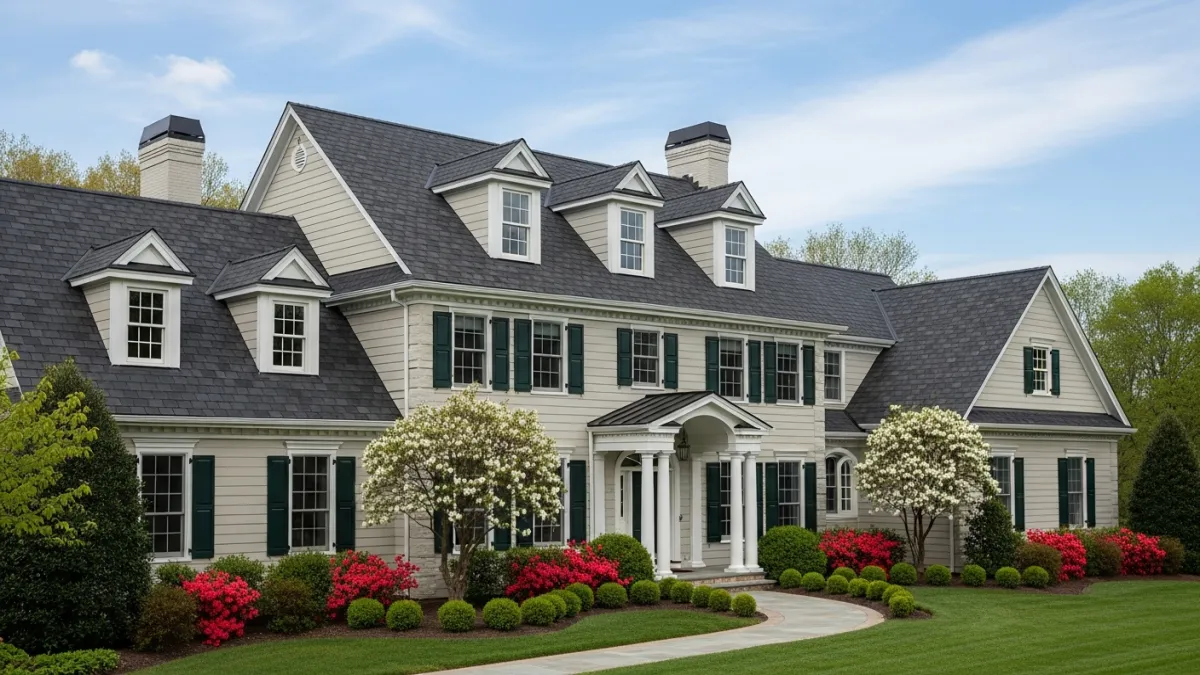
Architectural shingles — also called dimensional or laminate shingles — are the most popular roofing material in Northern Virginia by a wide margin. They're made from two or more layers of asphalt-coated fiberglass bonded together, creating a thicker, heavier, more dimensional shingle that provides better wind resistance, improved weather performance, and a more attractive appearance than three-tab products. Major manufacturers like GAF, CertainTeed, and Owens Corning offer architectural lines with warranties ranging from 25 to 50 years (lifetime warranties are marketing terms — read the fine print).
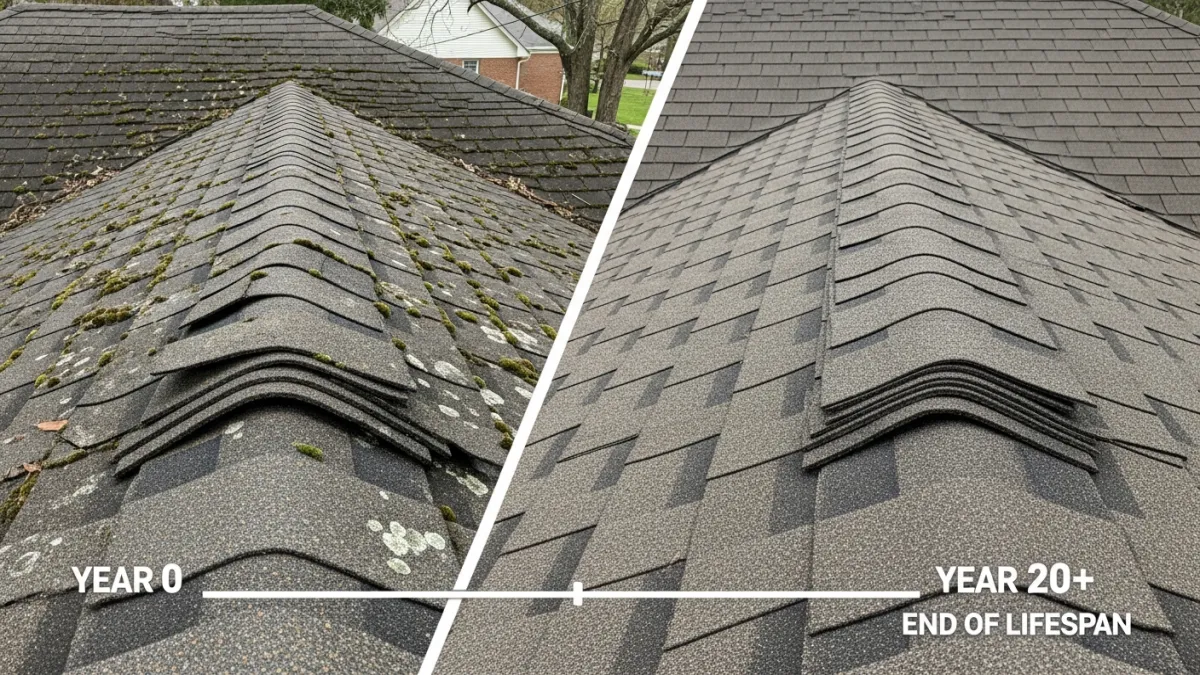
In the Northern Virginia climate, a well-installed architectural shingle roof with proper ventilation typically delivers 20 to 28 years of functional performance. The wide range reflects the significant impact that installation quality, ventilation, and maintenance have on lifespan. A roof installed by an experienced crew with proper ventilation and regular maintenance lands closer to 28 years. A roof with inadequate ventilation, deferred maintenance, or corner-cutting during installation may begin failing at 18 to 20 years.
Premium architectural shingle lines — products like GAF Timberline HDZ, CertainTeed Landmark Pro, or Owens Corning Duration — use heavier fiberglass mats, more asphalt, and enhanced granule adhesion compared to entry-level architectural products. These premium lines typically add two to five years of additional service life and offer enhanced wind warranties (up to 130 mph). The cost premium for upgrading from a standard to a premium architectural product is typically $1,500 to $3,000 for a standard Woodbridge or Northern Virginia home — a relatively small investment for several additional years of roof life.
Standing Seam Metal Roofing: 40 to 60 Years
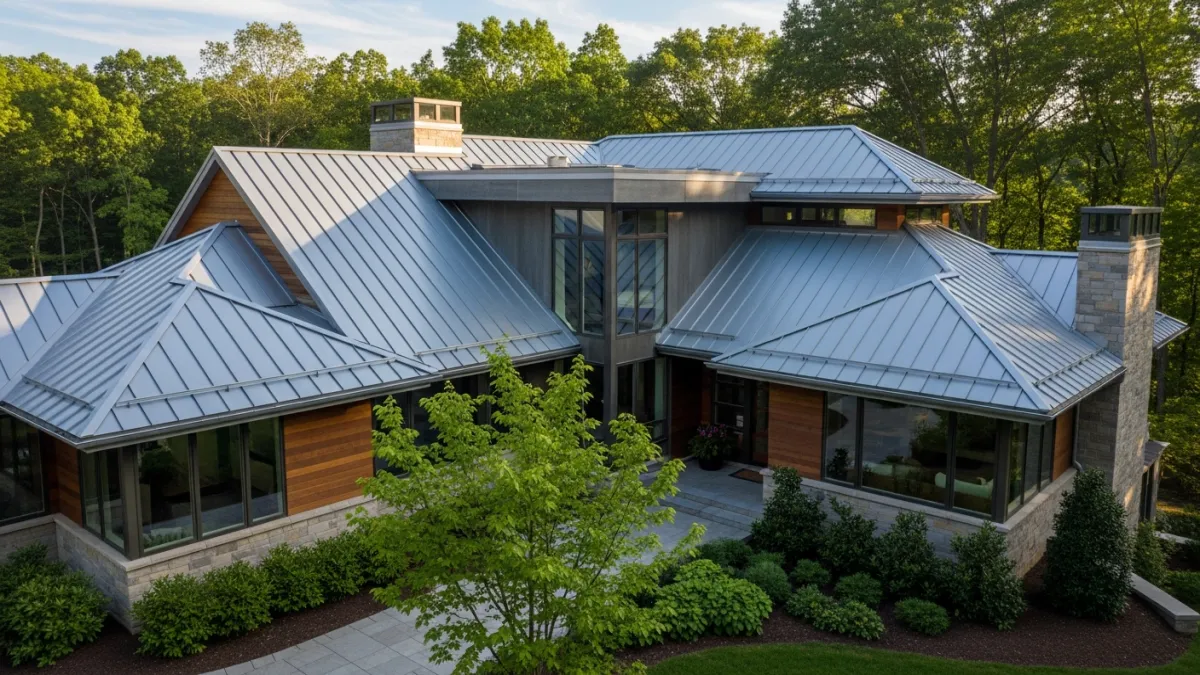
Standing seam metal roofing represents a fundamentally different category of longevity. Panels are typically 24-gauge or 26-gauge steel with a factory-applied paint finish, or aluminum for coastal applications. The panels interlock at raised seams with no exposed fasteners, creating a continuous surface that is virtually impervious to wind-driven rain, hail, and snow. In the Northern Virginia climate, standing seam metal delivers 40 to 60 years of performance — roughly twice the lifespan of architectural asphalt at roughly twice the initial cost.
Metal roofing handles Virginia's climate challenges better than asphalt in several specific ways. It reflects solar radiation rather than absorbing it, reducing attic heat gain in summer. It expands and contracts with temperature changes without cracking or losing surface material. It sheds snow and ice rather than allowing it to accumulate and form ice dams. And it doesn't support algae or moss growth the way asphalt does. The primary maintenance requirement is periodic inspection of panel fasteners and sealant at penetrations — far less than what an asphalt roof demands over the same time frame. Learn more about metal roofing benefits in Northern Virginia.
Flat Roof Membranes: TPO, EPDM, and Modified Bitumen
Many Northern Virginia homes — particularly townhouses, homes with additions, and homes with covered porches or bump-outs — have flat or low-slope roof sections that require membrane roofing systems rather than shingles. Each membrane type has a different expected lifespan:
- TPO (thermoplastic polyolefin): 20 to 30 years. Heat-welded seams create a continuous waterproof surface. Energy-efficient white reflective surface reduces cooling costs. The most popular choice for residential flat roofs in Northern Virginia
- EPDM (ethylene propylene diene monomer): 25 to 30 years. A durable synthetic rubber membrane that has been used successfully on flat roofs for decades. Black surface absorbs heat, which can be advantageous in winter but may increase cooling costs in summer
- Modified bitumen: 15 to 20 years. A multi-layer system with a reinforced base and a cap sheet with a granular surface. Well-suited for roofs with occasional foot traffic. Typically the shortest lifespan of the three options
Flat roof lifespan in Northern Virginia is heavily influenced by drainage. Standing water — even in small amounts — dramatically accelerates membrane deterioration. Proper slope, clean drains, and regular debris removal are essential to reaching the upper end of these lifespan ranges.
Slate and Tile: 75 to 100+ Years
Natural slate and clay tile roofs are rare on newer Northern Virginia homes but exist on older properties, particularly in established neighborhoods in Alexandria, McLean, and parts of Fairfax. A properly installed natural slate roof can last 75 to 100 years or more — some slate roofs in the Mid-Atlantic are still performing after 150 years. The slate itself is essentially permanent; what fails over time are the fasteners, the flashing, and the underlayment beneath the slate. Maintenance on a slate roof is specialized and should only be performed by contractors with specific slate experience. Replacing a broken slate tile incorrectly can damage surrounding tiles and create new leak points.
| Roofing Material | Manufacturer Warranty | Real-World NoVA Lifespan | Key Vulnerability |
|---|---|---|---|
| Three-Tab Asphalt | 20–25 years | 15–20 years | Wind uplift, granule loss |
| Architectural Asphalt | 25–50 years | 20–28 years | Heat aging, UV degradation |
| Standing Seam Metal | 30–50 years | 40–60 years | Fastener corrosion (rare) |
| TPO Membrane | 20–30 years | 20–30 years | Ponding water, seam failure |
| EPDM Rubber | 20–30 years | 25–30 years | Seam adhesive degradation |
| Modified Bitumen | 15–20 years | 15–20 years | UV breakdown, blister formation |
| Natural Slate | 75–100 years | 75–100+ years | Fastener and flashing failure |
What Shortens Roof Life in Northern Virginia
Several factors specific to the Northern Virginia climate and housing stock can dramatically shorten your roof's functional lifespan. Understanding these factors helps you take preventive action before damage compounds.
Poor Attic Ventilation
Inadequate attic ventilation is the single most common reason roofs in Northern Virginia fail prematurely. When your attic doesn't have balanced intake ventilation at the soffits and exhaust ventilation at the ridge, heat builds up to extreme levels in summer — often 140 to 160 degrees or higher. This superheated air cooks the shingles from the underside, softening the asphalt binder and accelerating granule loss at a rate far beyond what normal weathering would produce. In winter, trapped warm air melts snow on the upper roof, which refreezes at the cold eaves and creates ice dams that force water under the shingles.
The fix is straightforward: ensure your soffit vents are not blocked by insulation, verify that your ridge vent provides continuous exhaust, and confirm that the total net free area of ventilation meets the 1:150 ratio (one square foot of net free ventilation for every 150 square feet of attic floor). During any roof replacement, we assess ventilation and correct any deficiencies — it's one of the most cost-effective ways to extend the new roof's life.
Storm Damage — Visible and Hidden
Northern Virginia averages 35 to 45 thunderstorm days per year, and severe storms with wind gusts exceeding 60 mph are not uncommon during spring and summer. These storms cause two types of damage: visible damage like blown-off shingles and dented flashing, and hidden damage like bruised shingles where the granule-to-mat bond has been broken but the shingle hasn't yet cracked. Hidden storm damage shortens lifespan because the compromised areas deteriorate faster than the surrounding material, creating leak points months or years after the initial event.
Having your roof inspected after any significant storm is essential. A professional inspection catches hidden damage while it's still repairable and while your insurance claim window is still open. Waiting until a leak develops means the damage has progressed and may no longer be fully covered.
Biological Growth: Algae, Moss, and Lichen
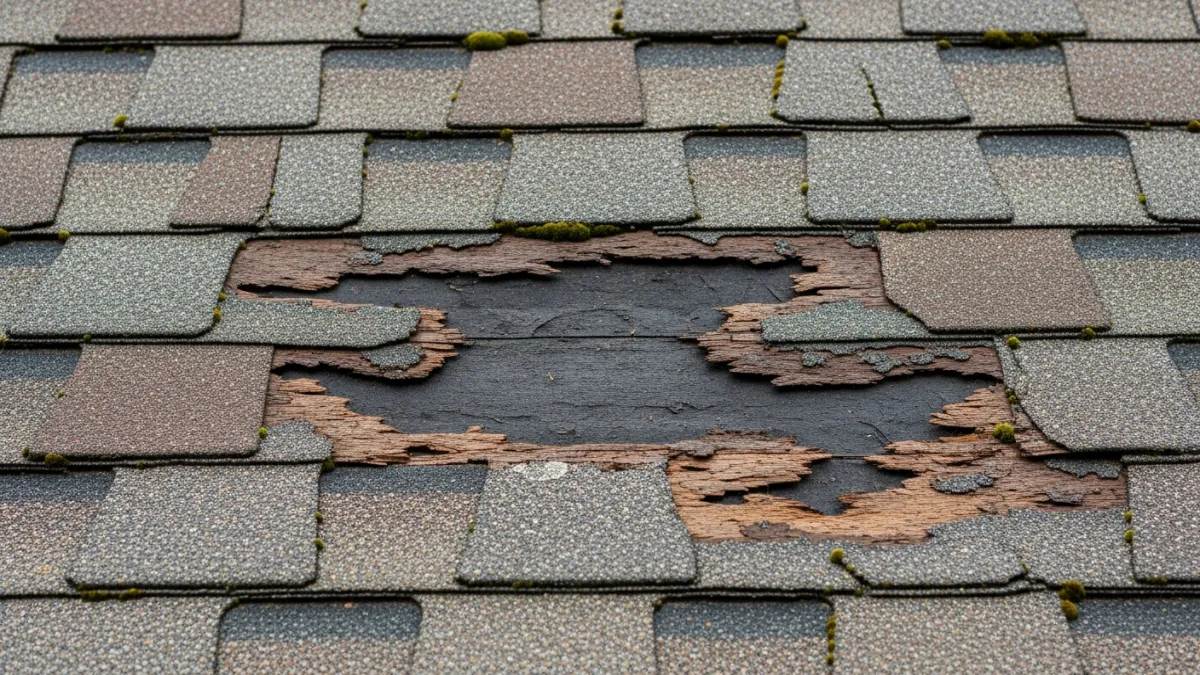
Virginia's humid summers create ideal conditions for algae growth on north-facing and shade-covered roof slopes. Algae appears as dark streaks that many homeowners mistake for dirt or aging. While algae is primarily cosmetic, it holds moisture against the shingle surface and accelerates granule loss over time. Moss is more destructive — its root system works beneath shingle edges and lifts them, creating pathways for water intrusion. Lichen combines the worst characteristics of both, bonding tenaciously to the granular surface and physically damaging shingles when removed.
Prevention is more effective than remediation. Trimming overhanging branches to increase sunlight exposure, maintaining clean gutters, and installing zinc or copper strips near the ridge that release trace metals during rain are all proven strategies for reducing biological growth. Many modern shingle lines incorporate algae-resistant granules that inhibit growth for 10 to 15 years.
Deferred Maintenance
Small roofing problems don't stay small. A cracked pipe boot that costs $200 to replace today allows water to penetrate the deck for the next six months, resulting in rotted decking, damaged insulation, and ceiling stains that cost $2,000 or more to repair. Clogged gutters that overflow in rain send water behind the drip edge and under the starter course, creating conditions for eave rot. Flashing that separates from a chimney allows water to travel down the chimney chase and into the wall cavity, where it causes damage invisible from both outside and inside until mold or structural failure occurs.
The 1% rule provides a useful budgeting framework: set aside roughly 1% of your home's value annually for maintenance including roofing. For a $500,000 Northern Virginia home, that's $5,000 per year across all maintenance categories — and a portion of that should go toward roof upkeep.
Poor Initial Installation
A roof is only as good as its installation. Common installation shortcuts that reduce lifespan include four-nail fastener patterns instead of the six-nail pattern that provides superior wind resistance, improper shingle exposure (too much of each shingle visible, reducing overlap protection), inadequate ice-and-water shield at eaves and valleys, skipped or improperly installed drip edge, insufficient flashing at wall transitions and penetrations, and ridge vent installed without proper baffles. These shortcuts save the installer time and material but can reduce your roof's lifespan by five to ten years. When selecting a contractor for replacement, ask specifically about their fastener pattern, their ice-and-water shield coverage, and their flashing methods. A quality contractor welcomes these questions.
The 30% Rule: When to Replace Instead of Repair
One of the most useful decision-making tools for homeowners facing ongoing roof problems is the repair-vs-replace 30% rule. Here's how it works:
First, get a current estimate for full roof replacement. For this example, let's use $12,000 — a typical number for a 2,000 square foot Northern Virginia home with architectural asphalt shingles. Calculate 30% of that number: $3,600. Now add up everything you've spent on roof repairs over the past three to five years, plus any repair your contractor is currently recommending. If that total approaches or exceeds $3,600, replacement is almost certainly the better financial decision.
The reasoning is straightforward. When a roof requires frequent, distributed repairs, the underlying system is nearing the end of its functional life. Each repair fixes a symptom, but the root cause — worn-out material, failed adhesive bonds, degraded underlayment — continues progressing everywhere you haven't repaired yet. The next failure point is already developing. At some point, the cumulative cost of reacting to one failure after another exceeds the cost of proactively installing a new, warrantied system.
Let's work through the math with a specific scenario. A homeowner in Dale City has a 22-year-old architectural shingle roof. Over the past three years, they've spent $800 on a flashing repair, $450 on a pipe boot replacement, and $1,200 on replacing shingles blown off during a storm. Their contractor now recommends another $1,500 repair for a valley that's leaking. The cumulative total is $3,950 — already past the 30% threshold. This homeowner is better served by investing in a new roof that comes with a full manufacturer warranty and a contractor workmanship warranty, rather than continuing to patch an aging system.
Cost of Roof Replacement in Northern Virginia
When your roof reaches the end of its service life, understanding replacement costs helps you plan. Northern Virginia prices run 15 to 25 percent above national averages due to higher labor rates, permit requirements, and material costs. The figures below represent total installed costs for a standard 2,000 square foot home.
| Service / Item | Low End | High End | Notes |
|---|---|---|---|
| Architectural asphalt shingles (2,000 sq ft) | $8,500 | $15,000 | Material + labor, NoVA market |
| Premium architectural shingles (2,000 sq ft) | $12,000 | $18,000 | Enhanced wind and impact ratings |
| Standing seam metal roof (2,000 sq ft) | $16,000 | $24,000 | 40–60 year lifespan |
| TPO flat roof section (per 100 sq ft) | $600 | $1,200 | Low-slope/flat sections only |
| Tear-off and disposal (single layer) | $1,000 | $2,500 | Often included in total price |
| Decking replacement (per 4x8 sheet) | $75 | $150 | Quantity found during tear-off |
| Building permit (varies by county) | $75 | $300 | Required for full replacement |
Cost Per Year of Service Life
One of the most useful ways to compare roofing materials is calculating the cost per year of service life. This metric reveals the true annual cost of owning each type of roof:
- Architectural asphalt: $12,000 average installed cost divided by 24 years average lifespan = roughly $500 per year
- Standing seam metal: $20,000 average installed cost divided by 50 years average lifespan = $400 per year
- Three-tab asphalt: $7,500 average installed cost divided by 17.5 years average lifespan = roughly $430 per year
By this calculation, metal roofing actually delivers the lowest annual cost despite the highest upfront price. Three-tab shingles — often chosen for their low initial cost — end up more expensive per year than architectural products because their shorter lifespan means more frequent replacement cycles. These numbers don't include maintenance costs, which are lower for metal than for asphalt, widening the advantage further over the full ownership period.
Prices shown are typical ranges for Northern Virginia as of 2025 and vary based on home size, material grade, site access, and current material costs. Contact us for a free on-site estimate.
How to Extend Your Roof's Lifespan
While you can't control the weather, you can control the factors that determine whether your roof reaches the upper or lower end of its expected lifespan. Here are the highest-impact actions you can take.
Optimize Attic Ventilation
If you do one thing to extend your roof's life, make it this. Proper attic ventilation with balanced soffit intake and ridge exhaust keeps summer attic temperatures closer to ambient outdoor temperatures, reducing the thermal stress on your shingles. In winter, it prevents warm air from melting snow on the roof surface and creating ice dams at the eaves. The target is a 1:150 ratio of net free ventilation area to attic floor area. Check that insulation hasn't been blown or pushed over your soffit vents — this is one of the most common ventilation problems we find during inspections.
Keep Gutters Clean and Functional
Clogged gutters cause water to back up under the drip edge and behind the starter course, which creates conditions for eave rot and fascia board damage. In winter, ice forms in clogged gutters and creates additional weight and ice dam conditions at the eave. Clean your gutters at least twice a year — in late fall after leaves have dropped and in late spring after pollen season. If you have heavy tree coverage, quarterly cleaning may be necessary. Gutter guards can reduce the frequency of cleaning but don't eliminate it entirely.
Trim Trees and Manage Shade
Overhanging tree branches create three separate problems for your roof: they drop leaves and debris that accumulate in valleys and behind dormers, they provide shade that promotes algae and moss growth, and they pose a direct physical damage risk during storms when branches break and fall. Maintain a minimum six-foot clearance between branches and the roof surface. In communities across Springfield, Burke, and other tree-heavy Northern Virginia neighborhoods, this single maintenance step can add years to your roof's life.
Fix Small Problems Immediately
A cracked pipe boot costs $150 to $300 to replace. A missing shingle section costs $200 to $500 to repair. Deteriorated flashing around a chimney costs $300 to $800 to address. These are all small numbers compared to the $3,000 to $8,000 that the resulting water damage can cost if left unaddressed for a season or two. Make it a habit to address roofing repairs within two weeks of discovering them — and to schedule a professional inspection after any storm that brings wind gusts above 50 mph or visible hail.
Schedule Regular Professional Inspections
Once your roof passes the 10-year mark, professional inspections every two to three years pay for themselves many times over. A trained inspector can identify developing problems — granule loss patterns, flashing separation, ventilation issues, early signs of decking deterioration — that aren't visible from the ground. Catching these problems early when they're inexpensive to fix prevents them from compounding into expensive failures. Our roof inspection service includes a written report with photos documenting current conditions and prioritized recommendations.
Signs Your Northern Virginia Roof Is Reaching End of Life
Knowing what to look for helps you plan for replacement before an emergency forces your hand. Here are the most reliable indicators that your roof is approaching the end of its functional lifespan:
- Widespread granule loss: If you find granules accumulating in your gutters after every rain, the shingles are losing their protective surface coating. Isolated granule loss on a few shingles is normal; consistent loss across the entire roof indicates systemic aging
- Curling and cracking: Shingle edges that curl upward (cupping) or downward (clawing) signal that the asphalt has lost flexibility. Cracking across the face of multiple shingles confirms this — the material can no longer expand and contract with temperature changes without fracturing
- Multiple leak points: A single leak from a failed pipe boot or damaged flashing is a repair issue. Multiple leaks appearing in different areas of the home indicate that the roof system as a whole is failing, not just one component
- Visible daylight from the attic: If you can see daylight through the roof boards from inside the attic, water can get in through the same gaps. This indicates either decking gaps or shingle failure significant enough to expose the underlying structure
- Sagging or soft spots: Areas of the roof that feel spongy underfoot or show visible sagging from the ground indicate decking deterioration, which means water has been penetrating the system for an extended period
- Roof age past 20 years: If your architectural shingle roof is past the 20-year mark and shows any combination of the symptoms above, replacement is the financially sound decision. Additional repairs deliver diminishing returns on a system that's wearing out uniformly
If you're unsure whether your roof needs repair or replacement, schedule a professional inspection. We'll give you an honest assessment and explain your options clearly.
How Old Is Your Roof? Get a Free Assessment
Not sure how much life your roof has left? We'll inspect your roof, assess its current condition, and give you a clear picture of where it stands. Call (571) 570-7930 or schedule online — no obligation, no pressure.
Schedule Free ConsultationFrequently Asked Questions
Conclusion
How long does a roof last in Northern Virginia? The answer depends on the material, the quality of installation, the effectiveness of your attic ventilation, and how consistently you maintain it. Architectural asphalt shingles deliver 20 to 28 years, standing seam metal lasts 40 to 60 years, and flat roof membranes range from 15 to 30 years depending on the product. Northern Virginia's combination of extreme heat, freeze-thaw cycles, severe storms, and humidity creates conditions that shorten lifespan compared to milder regions — which makes proper installation and ongoing maintenance all the more important.
If your roof is approaching the 20-year mark, showing signs of widespread wear, or consuming increasing amounts of repair money, it's time for a professional assessment. Woodbridge Roofers provides free roof inspections across Northern Virginia — we'll tell you honestly where your roof stands and what your options are. Call (571) 570-7930 or schedule a free consultation to get started.