Roof Repair vs. Replacement: Which Is Right for Your Woodbridge Home?
Roof Repair vs. Replacement: Which Is Right for Your Woodbridge Home?
Key Takeaways
- Use the 30 percent rule: if the repair estimate exceeds 30% of what a full replacement would cost, replacement is the better investment
- Roof repairs in Woodbridge VA typically cost $350 to $8,000 depending on scope, while full replacement ranges from $8,500 to $22,000
- Roofs under 15 years old with isolated damage are almost always better candidates for repair than replacement
- Roofs over 20 years old with widespread deterioration across multiple slopes generally need full replacement
- Storm damage may qualify for an insurance claim regardless of whether the approved scope is repair or replacement
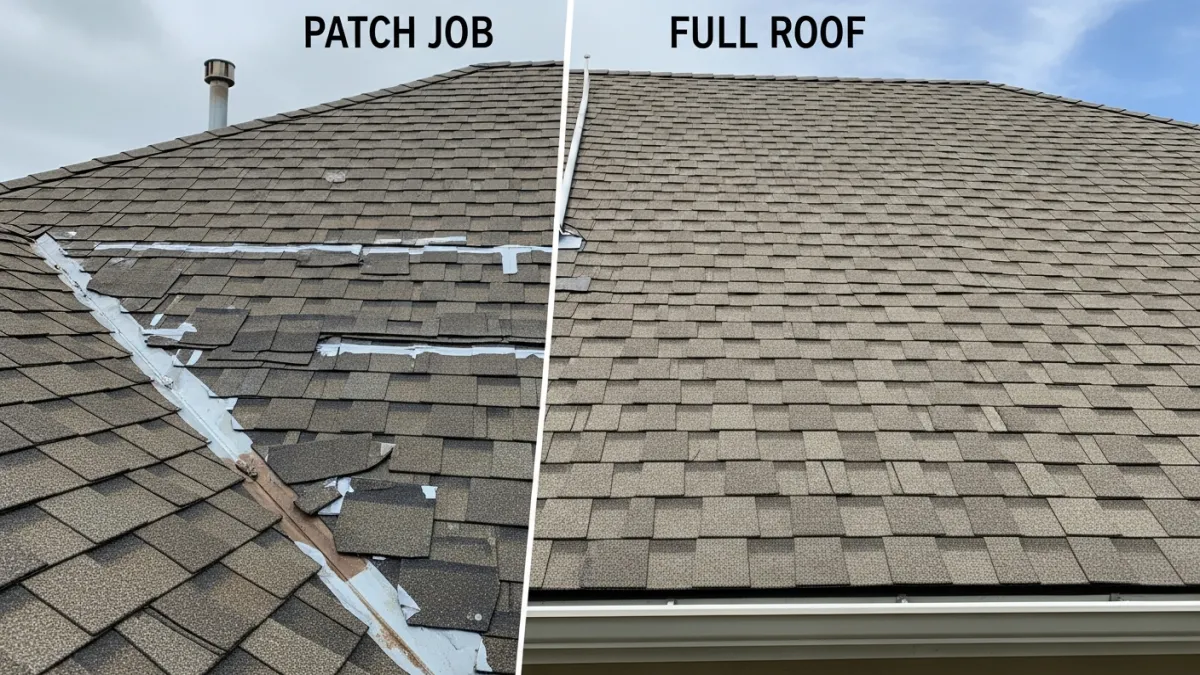
If your Woodbridge home has a roof leak, missing shingles, or visible wear, the first question is whether you need a roof repair or a full replacement. The answer depends on three factors: the age of your roof, the extent of the damage, and how much you have already spent on previous repairs. A targeted repair on a relatively young roof with isolated damage is almost always the right call. But once your roof passes the 20-year mark and problems start appearing on multiple slopes, continued patching delivers diminishing returns and full replacement becomes the financially sound decision.
This is one of the most consequential financial decisions you will make as a homeowner. Getting it wrong in either direction costs real money. Replacing a roof that only needs a repair wastes thousands of dollars. But repeatedly patching a roof that has reached the end of its functional life wastes money too — those repair dollars could have been applied toward a new roof with a full warranty and decades of reliable performance ahead of it.
Woodbridge sits in Prince William County where our homes face a specific combination of weather stresses that directly affect this decision. Summers bring sustained heat and humidity that accelerate shingle aging. Winter freeze-thaw cycles work moisture into hairline cracks and expand them over months. Thunderstorms roll through the Potomac corridor with wind gusts that test every shingle seal on your roof. And the occasional remnants of a tropical system can dump several inches of rain in hours, exposing every weakness in an aging roofing system simultaneously. Understanding how these conditions interact with your roof's age and current condition is the foundation of making the right repair-vs-replace decision.
When Roof Repair Is the Right Choice
Roof repair makes sense when the problem is localized and the rest of your roofing system still has meaningful service life remaining. Here are the scenarios where repair is almost always the correct call for Woodbridge homeowners:
Your Roof Is Under 15 Years Old
Architectural asphalt shingles — the most common roofing material on Woodbridge homes — carry manufacturer warranties of 25 to 30 years and typically deliver 20 to 25 years of real-world performance in the Northern Virginia climate. If your roof was installed within the last 15 years and you are dealing with damage to a specific section, the surrounding material still has years of reliable service left. Tearing off an entire roof that has a decade or more of life remaining to fix an isolated problem is not a sound financial decision.
Common repairs on younger roofs include replacing shingles blown off during a windstorm, resealing a chimney flashing that has separated from the masonry, replacing a cracked pipe boot around a plumbing vent, and patching a small section of valley flashing that has corroded. These repairs typically cost $350 to $2,500 and restore full function to a roofing system that is otherwise performing well.
The Damage Is Isolated to One Area
A leak in one location does not mean your entire roof has failed. Water follows gravity and the path of least resistance, which means a leak appearing in your ceiling could originate from a single point of failure — a compromised flashing joint, a cracked pipe boot, or a section of shingles lifted by wind. If a thorough inspection confirms that the rest of the roof is in good condition with intact granule coverage, solid adhesive seals, and no signs of widespread deterioration, repairing the specific failure point is the appropriate response.
Homes in Woodbridge neighborhoods like Marumsco Hills, Featherstone, and the communities along Route 1 often have straightforward roof geometries where isolating and repairing a single problem area is practical and cost-effective. The repair addresses the immediate issue without the disruption and expense of a full tear-off.
Storm Damage on an Otherwise Healthy Roof
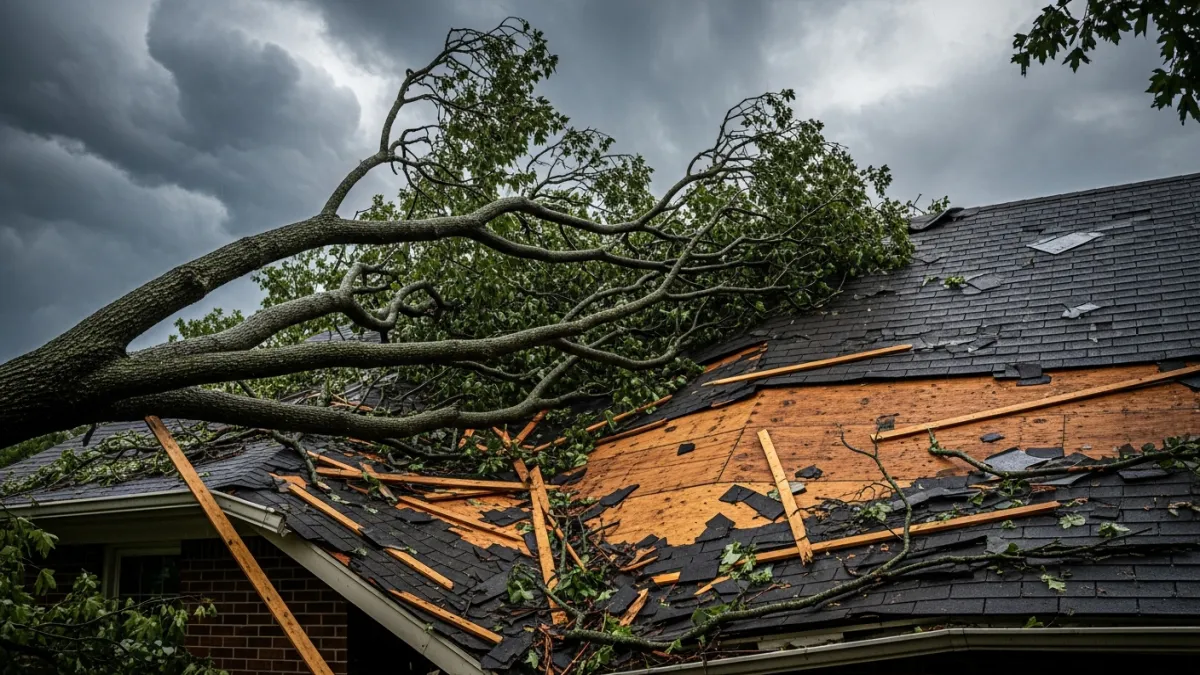
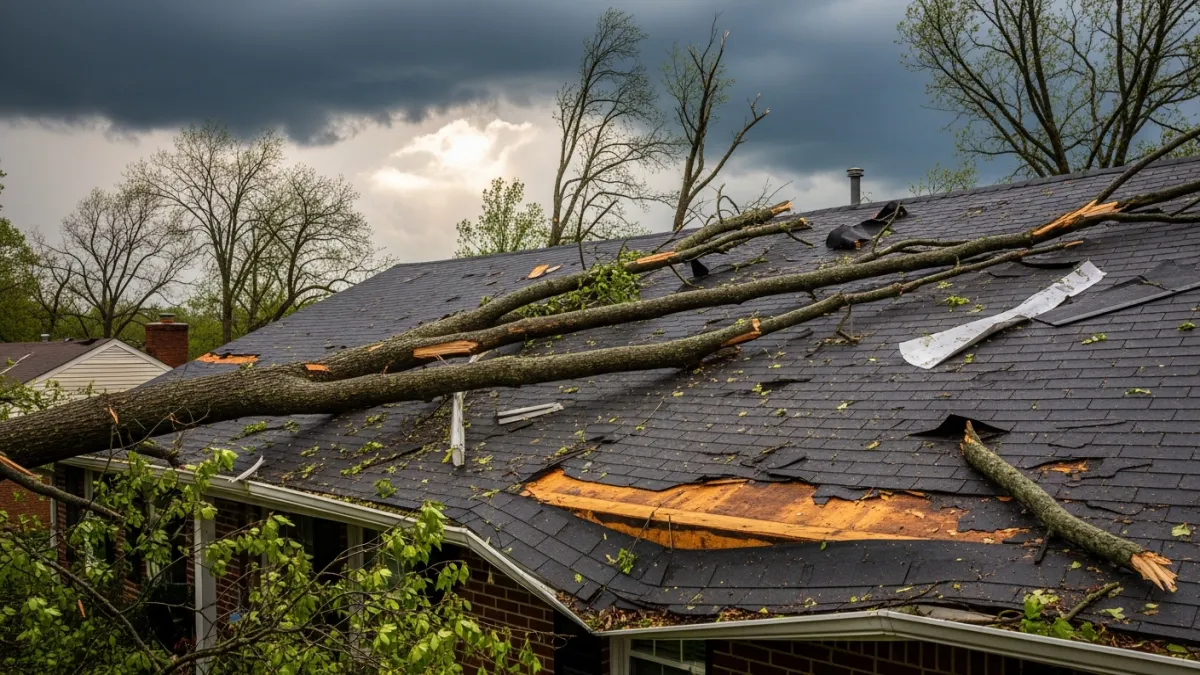
Severe thunderstorms and the occasional remnants of a tropical system hit Woodbridge regularly. These storms can tear shingles off a small section, damage a ridge cap, or drive debris into a valley. When the damage is limited to the area directly affected by the storm and the rest of the roof shows no signs of age-related deterioration, repair is the right approach. In many cases, your homeowners insurance covers storm-related repairs — the claim pays for restoring the damaged section, and your roof continues performing for years to come.
Minor Flashing and Sealant Failures
Flashing — the metal pieces installed at transitions between roof planes, around chimneys, at wall junctions, and around skylights — can fail independently of the shingles. Sealant dries out and cracks over time. Step flashing can separate from the wall. Counter-flashing on chimneys can pull away from the mortar joint. These failures cause leaks, but they do not mean the shingle field itself has failed. A skilled roofer can repair or replace the specific flashing component, reseal the joint, and resolve the leak for a fraction of the cost of replacement.
When Roof Replacement Makes More Sense
Replacement becomes the financially and practically sound decision when the problems you are seeing are symptoms of a roofing system that has reached the end of its functional life. Continuing to repair individual failure points on a roof that is deteriorating across its entire surface is the roofing equivalent of patching tires on a car with 200,000 miles — each fix buys less time than the last.
Your Roof Is Over 20 Years Old
Standard architectural asphalt shingles in the Woodbridge climate realistically deliver 20 to 25 years of performance. Once you pass the 20-year mark, the shingle system is approaching the end of its designed service life. Even if a specific repair addresses today's leak, the underlying material on every other slope is at the same stage of deterioration. The next failure could appear on a different section within months. Replacement at this stage gives you a completely new system with a full manufacturer warranty and 25 or more years of expected performance instead of a series of declining-return repairs on aging material.
Widespread Granule Loss and Curling
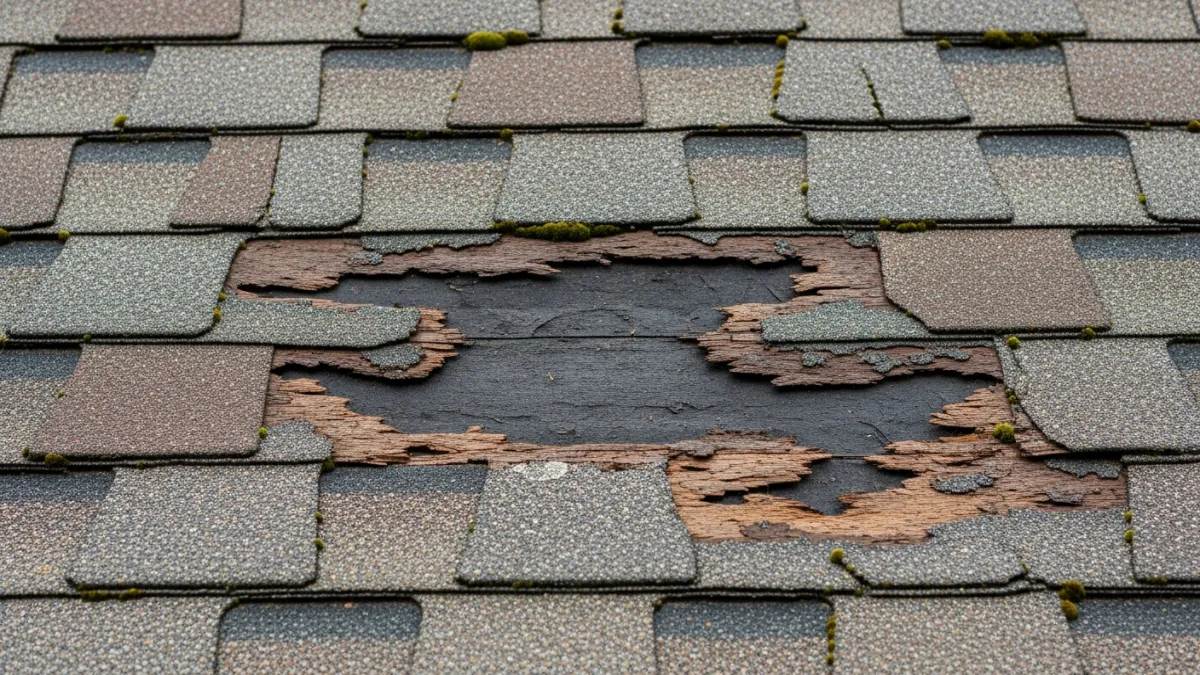
Check your gutters after a heavy rain. If you are finding significant quantities of granules — the small, sand-like particles that coat the surface of asphalt shingles — your shingles are losing their protective layer. Granule loss exposes the asphalt substrate to direct UV radiation, which accelerates aging exponentially. When this loss is visible across multiple slopes rather than confined to one section, the entire roof surface is degrading at a similar rate.
Curling is another system-wide indicator. Shingles curl from the edges inward as the asphalt dries out and contracts with age. Curled shingles lose their wind resistance, allow water to penetrate beneath the surface, and cannot be effectively flattened or resealed. When curling appears on multiple slopes, it signals that the shingle material has reached its end of life regardless of whether a specific leak has appeared yet.
Multiple Repairs in Recent Years
Track your repair history. If you have called a roofer two or more times in the past three years for different issues — a leak here, a blown section there, a failing flashing somewhere else — the pattern tells you that the roof is failing systemically rather than at isolated points. Each repair may have been appropriate at the time, but the cumulative cost is building toward a number that could have been applied to a new roof instead. This is where the 30 percent rule becomes especially useful as a decision framework.
Structural Concerns: Sagging and Soft Spots
If your roofline is visibly sagging or if you feel soft, spongy areas when walking on the roof, the damage has progressed beyond the surface shingles into the structural deck beneath. Prolonged water infiltration causes plywood or OSB decking to delaminate, rot, and lose its structural integrity. This level of damage cannot be addressed by simply laying new shingles on top — the compromised decking must be replaced, which requires a full tear-off. Once you are tearing off the existing roof and replacing decking, the incremental cost of installing new shingles on the entire surface rather than just the repaired section is relatively modest compared to the total project cost.
The 30 Percent Rule: A Practical Decision Framework
The 30 percent rule is a widely used guideline in the roofing industry that provides a clear, objective threshold for the repair-vs-replacement decision. The rule is straightforward: if the estimated cost of repairing your roof exceeds 30 percent of what a full replacement would cost, you should strongly consider replacement instead.
How the 30 Percent Rule Works in Practice
Here is a worked example using typical Woodbridge pricing. Assume your full roof replacement estimate is $12,000 for architectural asphalt shingles on a standard 2,000 square foot home. Thirty percent of that is $3,600. If the repair you need — say, replacing damaged shingles on two slopes, re-flashing the chimney, and replacing three pipe boots — comes in at $4,200, you have crossed the 30 percent threshold. At that point, you are paying more than a third of the replacement cost to patch a system that will still be aging everywhere else. Putting that $4,200 toward a $12,000 replacement — and financing the difference if needed through a program like our roofing financing options — gets you a completely new roof with a full warranty instead of a partial fix on aging material.
Conversely, if the repair estimate is $1,200 for an isolated flashing repair, that is only 10 percent of the replacement cost. The repair makes clear financial sense, and you can expect years of additional service from the rest of the roofing system.
When to Adjust the Rule
The 30 percent threshold is a guideline, not an absolute law. Several factors can shift the decision point:
- Roof age: If your roof is only 10 years old, you might extend the threshold to 40 or even 50 percent because the remaining shingles have substantial life left. If the roof is 22 years old, you might lower the threshold to 20 percent because even a smaller repair buys limited additional time
- Plans for the home: If you plan to sell within the next two to three years, a targeted repair may be sufficient to get through the selling period. If you plan to stay for 10 or more years, replacement provides better long-term value and eliminates the risk of recurring problems
- Insurance involvement: If storm damage triggered the need and your insurance covers the replacement, the out-of-pocket calculation changes significantly since you are only responsible for the deductible
- Energy efficiency: A new roof with modern underlayment, improved ventilation, and reflective shingle technology can reduce your cooling costs. This secondary benefit adds value beyond just fixing the immediate problem
| Scenario | Repair Cost | Replacement Cost | Ratio | Recommendation |
|---|---|---|---|---|
| Isolated flashing leak, 12-year-old roof | $800 | $12,000 | 7% | Repair |
| Wind damage to one slope, 8-year-old roof | $1,800 | $13,000 | 14% | Repair |
| Multi-slope shingle damage, 18-year-old roof | $4,500 | $12,000 | 38% | Replace |
| Widespread deterioration, 23-year-old roof | $5,200 | $14,000 | 37% | Replace |
| Pipe boot and ridge cap, 15-year-old roof | $1,200 | $11,500 | 10% | Repair |
Roof Inspection: The Starting Point for Every Decision
Whether you end up repairing or replacing, the process starts with the same step: a thorough, professional roof inspection. A quality inspection takes 30 to 60 minutes and covers every component of your roofing system — not just the area where you noticed a problem.
Here is what a comprehensive inspection evaluates:
- Shingle condition on every slope: Granule coverage, adhesive seal integrity, signs of curling, cracking, or blistering
- Flashing at all transitions: Chimneys, walls, valleys, skylights, and pipe penetrations
- Ridge vent and ventilation components: Proper airflow prevents premature shingle aging from attic heat buildup
- Gutters and drip edge: Proper water management protects the fascia and foundation
- Attic inspection from the underside: Looking for daylight through the deck, water stains, mold, and insulation condition
- Decking integrity: Soft spots, delamination, and signs of moisture damage
The inspection produces the data needed for an accurate diagnosis. A contractor who recommends replacement without performing a thorough inspection — or who recommends repair without checking the rest of the roof — is not giving you the complete picture. Woodbridge Roofers provides free inspections that cover every component so you can make the decision based on facts rather than guesswork.
How Virginia Climate Affects the Repair vs. Replacement Decision
The Northern Virginia climate plays a direct role in how quickly roofing materials deteriorate and how effective repairs remain over time. Understanding these factors helps you set realistic expectations for either option.
Summer Heat and UV Degradation
Woodbridge summers push attic temperatures to 140 to 160 degrees in poorly ventilated homes. This heat radiates upward through the decking and accelerates the aging of shingles from the underside. UV radiation simultaneously breaks down the asphalt binder from the surface. This two-sided thermal assault means shingles in Northern Virginia age faster than the same product would in a cooler, drier climate. When you are evaluating a repair, factor in that the surrounding material is experiencing the same accelerated aging — a repair may hold for years, but the material around it continues to degrade at the same rate.
Freeze-Thaw Cycles and Ice
Woodbridge typically experiences 30 to 50 freeze-thaw cycles per winter season. Each cycle allows water to enter hairline cracks in shingles and flashing, freeze and expand, then thaw and penetrate deeper. This process gradually works apart seals, loosens fasteners, and enlarges small failures into significant ones. A repair performed in the fall may hold through summer but could be compromised by the following winter's freeze-thaw activity if the surrounding material is already weakened. Homes along the Occoquan River and in low-lying neighborhoods near Neabsco Creek are especially susceptible to moisture-related deterioration because of the elevated humidity in those micro-environments.
Wind and Storm Exposure
Thunderstorms tracking up the Potomac corridor hit Woodbridge regularly between May and September. Wind gusts of 50 to 70 mph are not uncommon during strong storms, and these gusts test every shingle seal on your roof simultaneously. If your shingles have already lost their adhesive bond in some areas due to age, a strong storm can turn an aging-but-functional roof into a damaged one in a matter of minutes. This is the scenario where the repair-vs-replace decision often becomes urgent rather than planned, and having already assessed your roof's overall condition puts you in a better position to make a quick, informed decision.
Cost Comparison: Repair vs. Replacement in Woodbridge VA
Understanding the actual numbers helps you evaluate the financial trade-offs clearly. The following table shows typical roof repair and replacement costs in Woodbridge as of 2025. Northern Virginia prices run 15 to 25 percent above national averages due to higher labor rates, permitting requirements, and material logistics costs in the DMV metro area.
| Service / Item | Low End | High End | Notes |
|---|---|---|---|
| Minor repair (few shingles, sealant, pipe boot) | $350 | $1,500 | Isolated damage, quick fix |
| Moderate repair (section replacement, flashing) | $1,500 | $4,000 | Larger section, valley or chimney work |
| Major repair (full slope, extensive flashing + decking) | $4,000 | $8,000 | Approaching replacement territory |
| Full replacement — architectural asphalt (2,000 sq ft) | $8,500 | $15,000 | Material + labor, NoVA market |
| Full replacement — premium designer shingles (2,000 sq ft) | $12,000 | $18,000 | Enhanced wind and impact ratings |
| Full replacement — standing seam metal (2,000 sq ft) | $16,000 | $22,000 | 40-60 year lifespan |
| Permit — Prince William County | $75 | $250 | Required for full replacement |
| Decking replacement (per 4x8 sheet) | $75 | $150 | Quantity found during tear-off |
Factors That Affect Your Cost
Several variables determine where your specific project falls within these ranges:
- Roof pitch: Steeper roofs cost more for both repair and replacement due to additional safety equipment, slower work pace, and higher material usage per square foot of floor plan
- Roof complexity: Dormers, valleys, skylights, chimneys, and multiple intersecting planes add labor time and flashing requirements
- Access: Homes on steep lots or with limited driveway space for equipment increase setup time and cost
- Material grade: There is a meaningful cost difference between standard architectural shingles and premium designer products with enhanced wind and impact resistance
- Number of existing layers: Removing two layers of old shingles during a replacement adds $500 to $1,500 in tear-off and disposal cost
- Decking condition: Damaged decking replacement adds $75 to $150 per sheet, and significant rot can add $1,000 to $3,000 to the total project
Prices shown are typical ranges for Northern Virginia as of 2025 and vary based on home size, material grade, site access, and current material costs. Contact us for a free on-site estimate.
The Long-Term Math: Cumulative Repair Cost vs. One-Time Replacement
Looking at a single repair in isolation can be misleading. The real comparison is cumulative repair spending over several years versus the one-time cost of replacement. Here is how that math typically plays out for a Woodbridge home with a 20-year-old roof:
- Year 1: Chimney flashing repair — $1,200
- Year 2: Replace wind-damaged section on south slope — $2,800
- Year 3: Pipe boot replacement and valley repair — $1,600
- Year 4: Leak repair on north slope — $1,400
- Total repair spending over 4 years: $7,000
After spending $7,000, you still have a 24-year-old roof with aging material on every slope that was not specifically repaired. If a full replacement at year one would have cost $12,000, the homeowner has spent 58 percent of that amount on repairs and still faces the inevitable replacement. Had they replaced at year one, they would be four years into a new roof with a full warranty, no leaks, and no further repair costs for the foreseeable future.
This cumulative-cost perspective is why experienced roofing contractors often recommend replacement for roofs that are past the 20-year mark with recurring issues. It is not about upselling — it is about helping homeowners avoid the scenario where they spend thousands on repairs and still end up needing a replacement within a few years.
Insurance Considerations for Repair vs. Replacement
If storm damage is involved, your insurance coverage significantly changes the financial equation. Here is how insurance typically applies to the repair-vs-replace decision in Virginia:
What insurance covers: Damage caused by sudden, covered events — windstorms, hail, fallen trees, lightning. If the storm damaged a limited section, the claim may cover a repair. If the damage is widespread across the entire roof surface, the claim may support full replacement. The adjuster makes this determination based on the extent and distribution of the damage.
What insurance does not cover: Normal wear and tear, age-related deterioration, deferred maintenance, or cosmetic issues that do not affect function. If your 25-year-old roof is failing due to age and a windstorm happens to blow off a few shingles, the claim covers the wind-damaged section but not the replacement of the entire aging system.
Contractor involvement matters: Having your roofing contractor present during the adjuster inspection is strongly recommended. A knowledgeable contractor identifies damage the adjuster might miss — bruised shingles, compromised flashing seals, and damaged underlayment that is not visible from the ground. If the initial adjuster assessment does not cover the full scope, your contractor can submit a supplement with additional documentation. Visit our roofing insurance claims page for a detailed walkthrough of the process.
Common Mistakes Homeowners Make
The repair-vs-replace decision is straightforward when you have complete information, but several common mistakes lead to poor outcomes:
Ignoring the Problem
The most expensive mistake is doing nothing. A small leak that costs $500 to repair today can cause $5,000 or more in interior water damage, mold remediation, and structural repair if left unaddressed for months. Water damage is progressive — it never stops on its own and always gets worse. Every day a leak continues, the eventual cost increases. Woodbridge's humid climate accelerates mold growth in damp attic spaces, which adds health concerns and remediation costs on top of the structural damage.
Choosing Based on Price Alone
The cheapest repair estimate is rarely the best value. A low-bid repair that uses mismatched materials, skips proper flashing work, or fails to address the root cause of the problem will fail sooner than a thorough repair done correctly. Similarly, the cheapest replacement bid may indicate shortcuts in material quality, underlayment, flashing, or workmanship. Get three estimates, compare them on scope and detail rather than just bottom-line price, and ask questions about anything that seems significantly different between proposals.
Layering New Shingles Over Old
Virginia building code allows a maximum of two layers of asphalt shingles on a roof. Some homeowners and contractors opt to install new shingles directly over the existing layer to save the cost of tear-off and disposal. While technically legal for the first overlay, this approach has significant drawbacks. The new shingles cannot lay as flat over the textured surface of old shingles, which reduces their wind resistance and creates channels for water. You cannot inspect or replace the underlayment and decking beneath. And when the overlaid roof eventually needs replacement, the tear-off cost doubles because both layers must come off. For most Woodbridge homes, a clean tear-off down to the deck followed by complete re-installation is the better long-term investment.
Neighborhood Considerations in Woodbridge
The repair-vs-replace decision can be influenced by factors specific to your Woodbridge neighborhood. Many communities in the area have homeowner associations with architectural guidelines that affect roofing decisions.
Neighborhoods along Dale Boulevard and in the Dale City communities often have HOAs that require approval for exterior changes, including roofing material and color. If your HOA requires a specific shingle product or color that is no longer available, a repair using a different but similar product may not meet the guidelines — which could push you toward replacement with an approved product across the entire roof.
The Lake Ridge communities near Occoquan Reservoir tend to have more heavily wooded lots where overhanging branches and leaf debris accelerate moss and algae growth. Roofs in these settings often show more biological deterioration on north-facing slopes, which can tip the decision toward replacement earlier than a similar-age roof in a less shaded setting.
Townhouse communities along Route 1 and in the Potomac Mills area present a different consideration. Many of these complexes share roof lines, and your HOA or condo association may coordinate roof work across multiple units. If the association is planning a building-wide replacement, timing your individual decision to align with that project can reduce your per-unit cost significantly.
What to Expect During the Repair or Replacement Process
Regardless of which direction you go, the process follows a professional sequence. For a detailed walkthrough of the replacement process specifically, see our guide on the roof replacement process in Woodbridge.
For Repairs
Most repairs take a few hours to one full day. The crew isolates the damaged area, removes the affected shingles and any compromised underlayment, inspects the decking beneath, installs new underlayment and shingles, and seals all transitions. You do not typically need to move your car or clear the yard for a minor repair, though keeping the immediate work area accessible helps the crew work efficiently. The noise level is significantly lower than a full replacement since only a small section of the roof is being worked on.
For Replacements
A full replacement takes one to three days and involves tear-off of the entire existing roof, decking inspection and repair, installation of new underlayment, shingles, flashing, ventilation components, and cleanup. The first day — tear-off — is the loudest and most disruptive. Plan to move vehicles out of the driveway, clear a 15-foot perimeter around the house, and make arrangements for noise-sensitive pets and children. The crew handles the building permit, coordinates the county inspection, and provides warranty documentation at completion.
Not Sure Whether to Repair or Replace?
Get a free, honest assessment from Woodbridge Roofers. We will inspect your entire roof, show you exactly what we find, and give you clear options with transparent pricing. Call us at (571) 570-7930 or schedule online.
Schedule Free ConsultationFrequently Asked Questions
Conclusion
The roof repair vs. replacement decision comes down to three variables: age, scope of damage, and cumulative cost. Roofs under 15 years old with isolated damage are almost always better served by a targeted repair. Roofs over 20 years old with widespread deterioration across multiple slopes are candidates for replacement. And the 30 percent rule gives you a clear, objective framework for everything in between — if the repair costs more than 30 percent of what replacement would cost, the math favors a new roof.
The worst decision is no decision. Ignoring a roof problem never makes it cheaper — water damage is progressive, and every day a leak continues, the eventual cost increases. Whether you need a $500 repair or a $12,000 replacement, the first step is the same: get a professional inspection that evaluates your entire roof and gives you an honest assessment. Call Woodbridge Roofers at (571) 570-7930 or book a free phone consultation. We will tell you what we find, explain your options clearly, and let you make the decision without pressure.