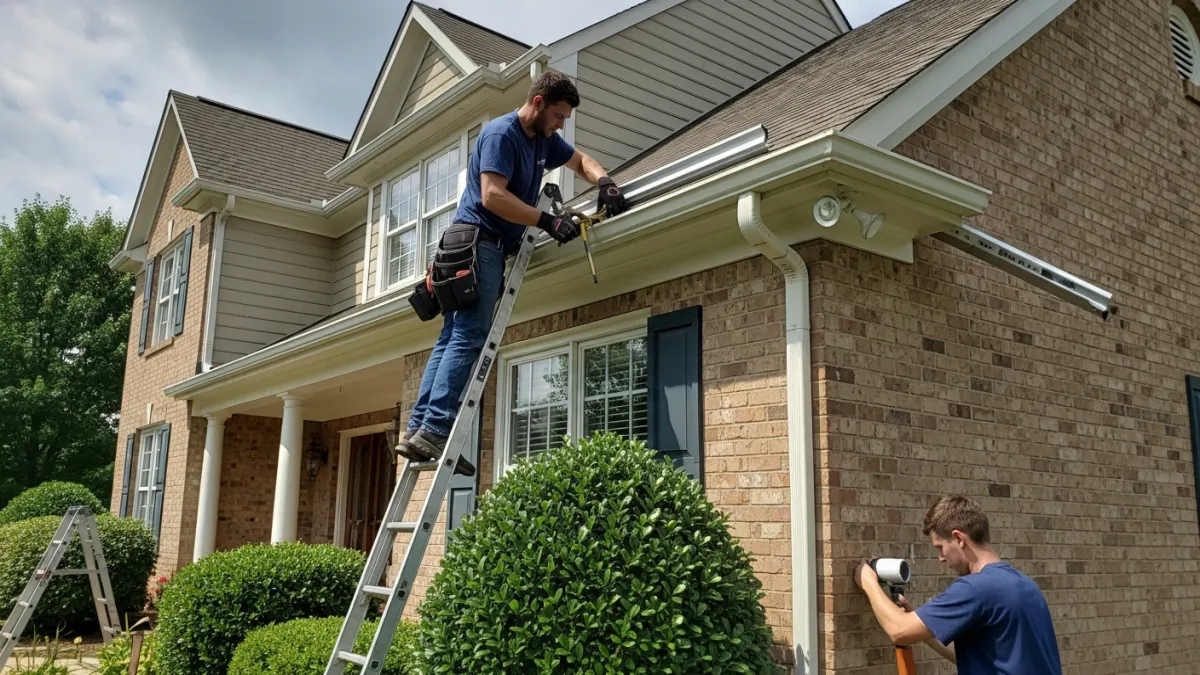
Siding Contractor in Woodbridge VA: Protect Your Home
Siding Contractor in Woodbridge VA: Protect Your Home
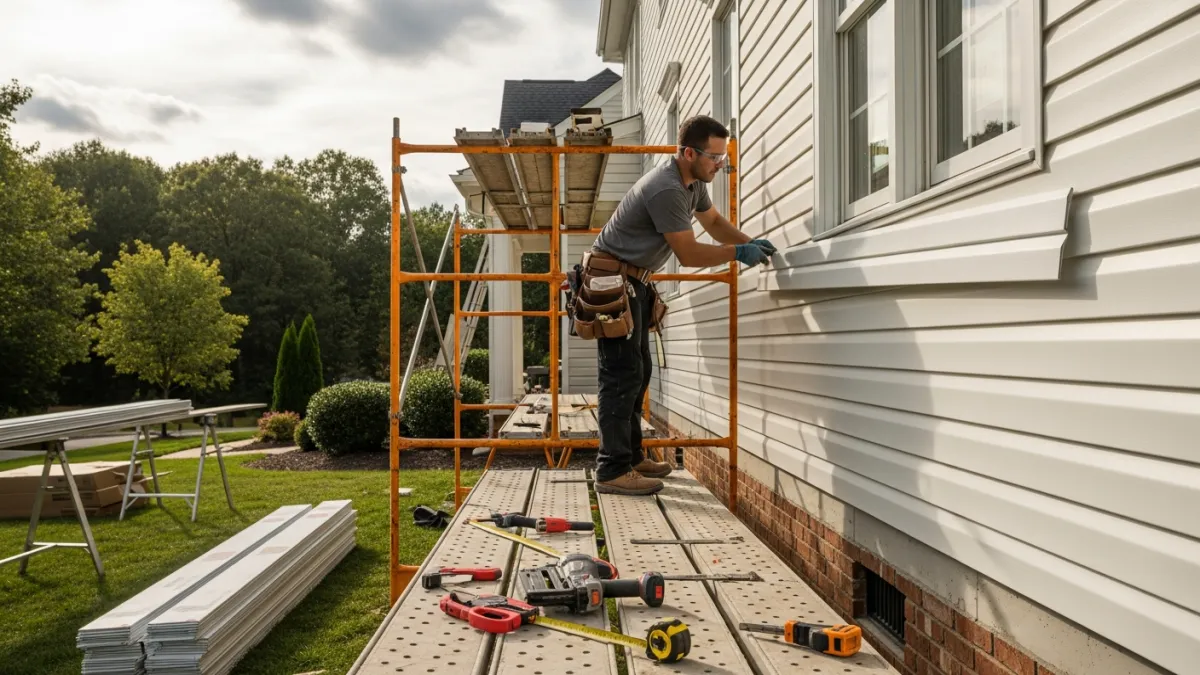
Key Takeaways
- Siding replacement in Woodbridge VA costs $8,000 to $28,000 depending on material, with vinyl at the low end and fiber cement at the high end
- Vinyl siding is the most popular choice for Woodbridge homes due to low maintenance, moisture resistance, and affordable installed cost
- Fiber cement siding like James Hardie offers superior durability and fire resistance but costs 60 to 80 percent more than vinyl
- Always verify your siding contractor holds a valid Virginia DPOR license and carries general liability and workers compensation insurance
- Northern Virginia's humidity, freeze-thaw cycles, and UV exposure make proper installation and moisture barriers critical for siding longevity
Your home's siding is its first line of defense against rain, wind, humidity, and temperature extremes — and in Woodbridge VA, those forces are relentless. Choosing the right siding contractor in Woodbridge VA means finding a licensed professional who understands how Northern Virginia's climate attacks exterior cladding and who installs every panel, trim piece, and moisture barrier correctly the first time. The wrong installer can leave gaps that allow water infiltration, skip the housewrap that prevents moisture from reaching your sheathing, or use fasteners that do not allow for thermal expansion — all of which lead to premature failure and expensive repairs.
Woodbridge sits in the heart of Prince William County where summer humidity routinely pushes above 80 percent, winter freeze-thaw cycles work moisture into every gap, and summer UV radiation fades and degrades exposed surfaces year after year. These conditions directly affect how long your siding lasts and which materials perform best. This guide walks you through everything you need to know — from choosing the right siding material for your home and budget, to understanding installation best practices, evaluating contractor credentials, and knowing what realistic costs look like in the Northern Virginia market.
Signs Your Siding Needs Replacement
Siding does not fail overnight. It deteriorates gradually, and many Woodbridge homeowners do not realize the extent of the damage until a problem becomes visible from the inside — moisture stains on interior walls, musty odors, or drafts that drive up heating and cooling costs. Here are the warning signs that indicate your siding has reached or is approaching the end of its functional life:
- Warping or buckling: Panels that no longer lay flat against the wall indicate moisture damage behind the siding, improper installation that did not allow for thermal expansion, or substrate deterioration. This is especially common on south and west-facing walls in Woodbridge where direct sun exposure causes significant thermal cycling
- Cracking and brittleness: Vinyl siding becomes brittle with age as UV radiation breaks down the PVC compound. Once siding becomes brittle enough to crack from normal contact — a stray ball, a leaning ladder, or expansion stress — it can no longer protect the wall behind it
- Fading: Significant, uneven fading indicates that the UV stabilizers in the siding material have been exhausted. While fading alone is cosmetic, it signals that the material is aging and may be losing other protective properties as well
- Mold, mildew, or algae growth: Biological growth on siding surfaces — especially on north-facing walls in shaded areas — holds moisture against the material and can penetrate seams. In Woodbridge's humid climate, mold growth is common on siding that is older or poorly maintained
- Peeling paint: On painted siding (wood or fiber cement), peeling paint exposes the substrate to moisture. Once the paint barrier is compromised, water infiltrates the material and freeze-thaw cycles cause it to crack and split
- High energy bills: Deteriorated siding allows air infiltration that makes your HVAC system work harder. If your heating and cooling costs have been trending upward without other explanation, compromised siding may be a contributing factor
- Visible rot: On wood or composite siding, poke suspect areas with a screwdriver. If the tool sinks in easily, the material has rotted and no longer provides structural support or weather protection
Siding Materials Compared for Woodbridge Homes
The material you choose affects the appearance, durability, maintenance requirements, and cost of your siding project. Here is an honest comparison of the options that make sense for homes in the Woodbridge climate.
Vinyl Siding
Vinyl is the most widely installed siding material in Woodbridge and across Northern Virginia. It is manufactured from PVC resin with UV stabilizers, impact modifiers, and colorants mixed throughout the material rather than applied as a surface coating. This means the color extends through the full thickness of the panel, so scratches do not reveal a different-colored substrate.
Vinyl siding offers several advantages for Woodbridge homeowners. It does not absorb moisture, which eliminates the rot and swelling issues that affect wood-based materials in our humid climate. It never needs painting. It cleans easily with a garden hose or pressure washer. And it is the most affordable siding option on a per-square-foot installed basis.
The limitations are real as well. Vinyl becomes brittle in extreme cold, making it more susceptible to impact damage during Woodbridge winters. It can warp or melt if exposed to concentrated reflected heat — a concern with certain energy-efficient window coatings that can focus sunlight onto adjacent siding. And while modern vinyl comes in many profiles that mimic wood grain, the look is less convincing up close than fiber cement or real wood.
Premium insulated vinyl siding adds a rigid foam backing that increases the panel's R-value, reduces sound transmission, and makes the siding feel more substantial. The added cost — roughly $1 to $2 more per square foot installed — is offset over time by improved energy performance, particularly in older Woodbridge homes with minimal wall insulation.
Fiber Cement Siding
Fiber cement siding — with James Hardie being the dominant brand in the Northern Virginia market — is made from a mixture of cement, sand, and cellulose fibers. The result is a dense, heavy panel that resists moisture, fire, insects, and impact significantly better than vinyl. Fiber cement can be manufactured to closely replicate the appearance of wood clapboard, cedar shingle, or smooth-face board, and it holds paint exceptionally well.
For Woodbridge homes, fiber cement offers excellent performance against the local climate challenges. It does not warp from heat exposure. It does not become brittle in cold weather. It resists the moisture and humidity that cause problems for wood-based siding. And its fire resistance — it has a Class A fire rating — provides a genuine safety advantage, particularly for homes with close lot spacing in neighborhoods along Dale Boulevard, in Dale City, and in the denser townhouse communities near Potomac Mills.
The trade-offs are cost and maintenance. Fiber cement costs 60 to 80 percent more than vinyl on an installed basis. It requires professional installation because the panels are heavy and require specialized cutting tools. And while the factory-applied paint finish is durable, it does need repainting every 10 to 15 years to maintain its appearance and protective properties.
Engineered Wood Siding
Engineered wood siding — brands like LP SmartSide — is made from wood strands bonded with resin and treated with zinc borate for moisture and insect resistance. It offers the natural wood appearance that many homeowners want, with better moisture performance than real wood. The material is lighter than fiber cement, easier to cut and install, and available in a range of profiles including lap siding, panel, and trim.
In Woodbridge's climate, engineered wood performs well when properly installed with appropriate clearance from grade level and sealed at all cut edges. It does require periodic repainting or restaining — typically every 7 to 10 years — and the factory finish needs to be maintained to prevent moisture infiltration at the surface. Homes in wooded neighborhoods like those near Prince William Forest Park or along the Occoquan River benefit from the natural aesthetic, though the maintenance requirement is higher than vinyl.
Real Wood Siding
Real wood siding — typically cedar, redwood, or pine — offers unmatched natural beauty but demands the most maintenance of any siding option. In Woodbridge's humid climate, real wood requires diligent attention to sealing, staining, and painting to prevent moisture absorption, swelling, rot, and insect damage. Expect to restain or repaint every 3 to 7 years depending on the exposure and wood species. While some historic homes in Old Town Woodbridge and along Route 1 have original wood siding that has been well maintained for decades, most modern homeowners find the maintenance commitment impractical compared to lower-maintenance alternatives.
| Material | Lifespan | Maintenance | Best For |
|---|---|---|---|
| Vinyl | 25-40 years | Minimal — occasional washing | Budget-friendly, low maintenance |
| Fiber Cement | 30-50 years | Repaint every 10-15 years | Durability, fire resistance, aesthetics |
| Engineered Wood | 20-30 years | Repaint/restain every 7-10 years | Natural wood look, moderate cost |
| Real Wood | 20-40 years | Stain/paint every 3-7 years | Historic homes, natural beauty |
Siding Installation: What Proper Work Looks Like
The quality of the installation matters as much as the quality of the material. Here is what distinguishes professional siding installation from work that will cause problems down the road.
Housewrap and Moisture Barrier
Before any siding panels go up, the wall sheathing must be protected with a weather-resistant barrier — typically Tyvek or a similar housewrap product. This barrier allows moisture vapor from inside the home to escape while preventing liquid water from penetrating inward. Every seam must be taped, every window and door opening must be properly flashed, and the housewrap must extend behind the drip cap at the top and overlap the foundation seal at the bottom. Skipping or improperly installing the housewrap is one of the most common and costly installation shortcuts. In Woodbridge's humid climate, moisture that reaches the sheathing without a proper barrier causes mold, rot, and structural damage that remains hidden behind the siding until the damage is severe.
Fastening and Thermal Expansion
Vinyl siding expands and contracts with temperature changes — a 12-foot panel can move as much as half an inch between a 20-degree winter day and a 95-degree summer afternoon. Proper installation requires that nails be driven into the center of the nail slot, left slightly loose (about 1/32 inch gap between the nail head and the panel), and that a small gap be left at the end of each panel where it meets trim or another panel. Driving nails tight or nailing at the end of the slot restricts the panel's movement and causes warping, buckling, and cracking — especially on the south and west-facing walls where Woodbridge homes experience the greatest temperature swings.
Fiber cement does not expand and contract like vinyl, but it does require proper fastening to prevent cracking. Each panel must be face-nailed or blind-nailed per the manufacturer's specifications, with the correct nail length to penetrate through the sheathing and into the stud. Using too-short nails or missing the studs creates panels that work loose over time.
Window and Door Trim
The areas around windows and doors are the most vulnerable points in any siding installation. Water naturally flows toward these openings, and every junction between the siding and the window or door frame is a potential entry point for moisture. Professional installation includes proper J-channel or receiver trim around each opening, with integrated flashing that directs water outward rather than allowing it to pool or penetrate. The trim must be tight enough to look clean but not so tight that it prevents drainage — a balance that requires experience and attention to detail.
Soffit and Fascia Integration
A complete siding project typically includes soffit panels beneath the roof overhang and fascia covering the rafter tails at the roof edge. Coordinating this work with gutter installation ensures the best results. These components serve both aesthetic and functional purposes — soffit panels often include vented sections that provide attic ventilation, and fascia provides a finished surface for gutter attachment. Coordinating siding, soffit, and fascia work ensures a seamless appearance and eliminates gaps where wind-driven rain can penetrate. Many Woodbridge homes built in the 1980s and 1990s have aluminum soffit and fascia that can be replaced with matching vinyl or aluminum to complement the new siding.
Cost of Siding Replacement in Woodbridge VA
Understanding siding replacement cost in Woodbridge starts with knowing that Northern Virginia prices run 15 to 25 percent above national averages. This premium reflects higher labor rates, material logistics costs, and the generally higher cost of operating a contracting business in the DMV metro area. The figures below are based on a standard 2,000 square foot home and represent total installed costs including labor, materials, removal of old siding, and standard trim work.
| Service / Item | Low End | High End | Notes |
|---|---|---|---|
| Vinyl siding — standard (2,000 sq ft home) | $8,000 | $14,000 | Material + labor, includes trim |
| Vinyl siding — insulated premium (2,000 sq ft home) | $11,000 | $18,000 | Foam-backed, improved R-value |
| Fiber cement siding (2,000 sq ft home) | $14,000 | $28,000 | James Hardie or equivalent |
| Engineered wood siding (2,000 sq ft home) | $12,000 | $24,000 | LP SmartSide or equivalent |
| Old siding removal and disposal | $1,000 | $3,000 | Varies by material and layers |
| Housewrap replacement | $500 | $1,500 | Essential for moisture protection |
| Soffit and fascia replacement | $1,500 | $4,000 | Often done with siding project |
| Partial siding repair (per wall section) | $500 | $3,000 | Depends on size and material |
Factors That Affect Your Siding Cost
Several variables determine where your specific project falls within these ranges:
- Total wall area: The actual square footage of exterior wall space — not the floor square footage — determines material and labor quantities. Two-story homes have significantly more wall area than single-story homes with the same footprint
- Number of windows and doors: Each opening requires trim work, flashing, and careful fitting. Homes with many windows cost more to side because the trim work is time-intensive
- Architectural details: Gables, dormers, bump-outs, and mixed-material designs add complexity and labor time
- Existing siding removal: Removing old siding adds cost, and multiple layers (common on older Woodbridge homes with siding layered over original material) increase removal time
- Sheathing condition: If the plywood or OSB sheathing beneath the old siding has moisture damage or rot, it must be replaced before new siding can be installed. This adds $40 to $80 per sheet
- Access: Multi-story homes, homes on steep lots, and homes with extensive landscaping close to the foundation require scaffolding or additional setup time
- Material grade: Within vinyl alone, there is a significant price difference between builder-grade panels and premium insulated products. The same applies to fiber cement grades and finishes
Prices shown are typical ranges for Northern Virginia as of 2025 and vary based on home size, material grade, site access, and current material costs. Contact us for a free on-site estimate.
How to Choose a Siding Contractor in Woodbridge
The contractor you hire determines the quality and longevity of your siding installation. Here is how to evaluate your options and avoid common pitfalls.
Verify DPOR Licensing
Virginia requires contractors performing siding work to hold a license from the Department of Professional and Occupational Regulation. You can verify any contractor's license status at the DPOR website in minutes. This is non-negotiable — an unlicensed contractor has not met basic competency requirements and may not carry proper insurance, leaving you liable for injuries or damage that occur on your property during the project.
Confirm Insurance Coverage
Ask for certificates of both general liability insurance and workers compensation coverage. Verify them directly with the insurance carrier, not just by looking at the document. General liability covers damage to your property during the work. Workers compensation covers injuries to crew members working on your home. Without both, you could be personally liable for medical costs if a worker is injured on your property.
Review the Estimate for Detail
A quality siding contractor provides a detailed, itemized estimate that lists the specific siding product (brand, profile, color), the square footage of coverage, trim materials, housewrap, soffit and fascia if included, removal and disposal of old siding, and labor. Vague lump-sum proposals that do not specify the product or break down the components are a warning sign. You need enough detail to compare proposals from different contractors on equal terms and to hold the contractor to a defined scope.
Check Local Experience
A contractor who has completed siding projects in Woodbridge and Prince William County understands the local climate factors that affect installation — the thermal expansion ranges, the humidity levels that influence drying times for sealants and paints, the wind exposure patterns, and the HOA approval processes common in area neighborhoods. Ask for references from projects in your area and follow up on them.
Understand the Warranty
Siding projects involve two warranties: the manufacturer's material warranty and the contractor's workmanship warranty. The manufacturer's warranty covers defects in the siding material itself — fading beyond specified limits, cracking, delamination. The contractor's workmanship warranty covers installation quality — proper fastening, flashing, moisture barrier installation, and trim work. Make sure you understand what each covers, how long each lasts, and what actions might void either warranty. A contractor who stands behind their work with a meaningful workmanship warranty demonstrates confidence in their installation quality.
Siding and Roofing: Why Coordinating Both Makes Sense
Many Woodbridge homeowners need both roofing and siding work around the same time, especially on homes built in the 1980s and 1990s where both systems are approaching or past their expected lifespan simultaneously. Coordinating both projects with a single contractor — or at least timing them together — offers several advantages.
The roof-to-wall transitions are the most critical intersection between the two systems. Step flashing where the roof meets a wall, kick-out flashing at the bottom of roof-to-wall junctions, and the drip edge at the eave all interact with the siding installation. When a single contractor handles both projects, these transitions are coordinated seamlessly. When different contractors handle each project separately, there is a risk that each assumes the other will handle the transition details — and neither does.
There are also practical cost savings from combining projects. The contractor only needs to mobilize equipment and scaffolding once. The housewrap and flashing work can be coordinated with the roofing underlayment. And many contractors offer a modest discount when booking both roofing and siding services together because the combined project uses their crew more efficiently.
Neighborhood Siding Considerations in Woodbridge
Different Woodbridge neighborhoods have different siding considerations based on age, HOA rules, and environmental factors.
Homes in the Lake Ridge communities near Occoquan Reservoir often sit on wooded lots where leaf debris, shade, and elevated humidity accelerate biological growth on siding surfaces. North-facing walls on these homes frequently show mold and algae issues earlier than homes in more open settings. Fiber cement and vinyl both handle this moisture exposure well, though regular cleaning every one to two years extends the appearance and lifespan of any material.
Dale City neighborhoods along Dale Boulevard and Cardinal Drive have many homes built in the 1970s and 1980s with original aluminum or first-generation vinyl siding that has reached or exceeded its expected lifespan. These communities represent some of the highest demand for siding replacement in the area, and many HOAs have updated their architectural guidelines to specify approved materials and colors.
Townhouse and condo communities in the Potomac Mills area and along Route 1 often coordinate siding work across multiple units for cost efficiency and aesthetic consistency. If your association is planning a building-wide siding project, timing your participation with the group effort reduces your per-unit cost and ensures a uniform appearance across the building.
The newer developments west of I-95 toward Manassas — including communities off Minnieville Road and in the Hoadly area — often have fiber cement or engineered wood siding as original material. These homes are still relatively young, and maintenance-oriented work like repainting or sealing is more appropriate than full replacement at this stage.
Siding Repair vs. Full Replacement
Not every siding issue requires full replacement. Targeted repairs can be appropriate when the damage is limited and the rest of the siding is in good condition.
When repair makes sense: Individual panels cracked by impact damage (a stray baseball, a fallen branch), localized water damage around one window, a small section of loose panels, or a few panels showing damage from a specific event like a storm. These repairs typically cost $500 to $3,000 and restore function without the cost and disruption of a full replacement.
When replacement is the better option: Widespread fading, cracking, or warping across multiple walls. Persistent moisture problems indicating failed housewrap or sheathing damage behind the siding. Mold growth that returns after cleaning because moisture is infiltrating from behind. Or when the siding is simply old enough that repairs become a recurring expense. The decision framework mirrors the repair vs. replacement logic for roofing — if cumulative repair costs are approaching 30 percent of replacement cost, full replacement is the better investment.
The Siding Replacement Process: What to Expect
A typical siding replacement project in Woodbridge takes three to seven days depending on the size of the home, the material being installed, and the complexity of the trim work. Here is a realistic timeline:
- Day 1-2: Old siding removal. The crew removes all existing siding, inspects the sheathing and housewrap beneath, and replaces any damaged sections. This phase reveals the true condition of the wall structure — any rot, moisture damage, or insect damage becomes visible and is addressed before new material goes up
- Day 2-3: Housewrap and preparation. New weather-resistant barrier is installed over the sheathing, with all seams taped and all window and door openings properly flashed. This is arguably the most important phase of the project because it creates the moisture barrier that protects your wall structure for the life of the new siding
- Day 3-6: Siding installation. New panels are installed from the bottom up, with proper fastening, expansion gaps, and trim integration at every window, door, and corner. Soffit and fascia work is coordinated with the panel installation
- Day 6-7: Trim, cleanup, and walkthrough. Final trim pieces, caulking at transitions, and cleanup of all debris and scrap material. The project manager walks the completed work with you, explaining what was installed and answering your questions
Ready to Protect Your Home with New Siding?
Get a free, detailed estimate from Woodbridge Roofers. We will assess your current siding, recommend the best material for your home and budget, and provide transparent pricing with no hidden costs. Call us at (571) 570-7930 or schedule online.
Schedule Free ConsultationFrequently Asked Questions
Conclusion
Your home's siding protects everything behind it — the sheathing, the framing, the insulation, and ultimately your family's comfort and safety. Choosing the right siding contractor in Woodbridge VA means working with a licensed, insured professional who understands how Northern Virginia's climate demands affect siding materials and installation practices. Whether you choose vinyl for its affordability and low maintenance, fiber cement for its superior durability and appearance, or engineered wood for its natural aesthetic, the quality of the installation determines how long the material actually performs.
If your siding is showing signs of age — warping, cracking, fading, or moisture damage — do not wait until water infiltration causes structural problems behind the walls. Call Woodbridge Roofers at (571) 570-7930 or book a free phone consultation. We will evaluate your current siding, recommend the best options for your home and budget, and give you a transparent, itemized estimate with no surprises.